

APES Unit 6 Switch Classroom Guide
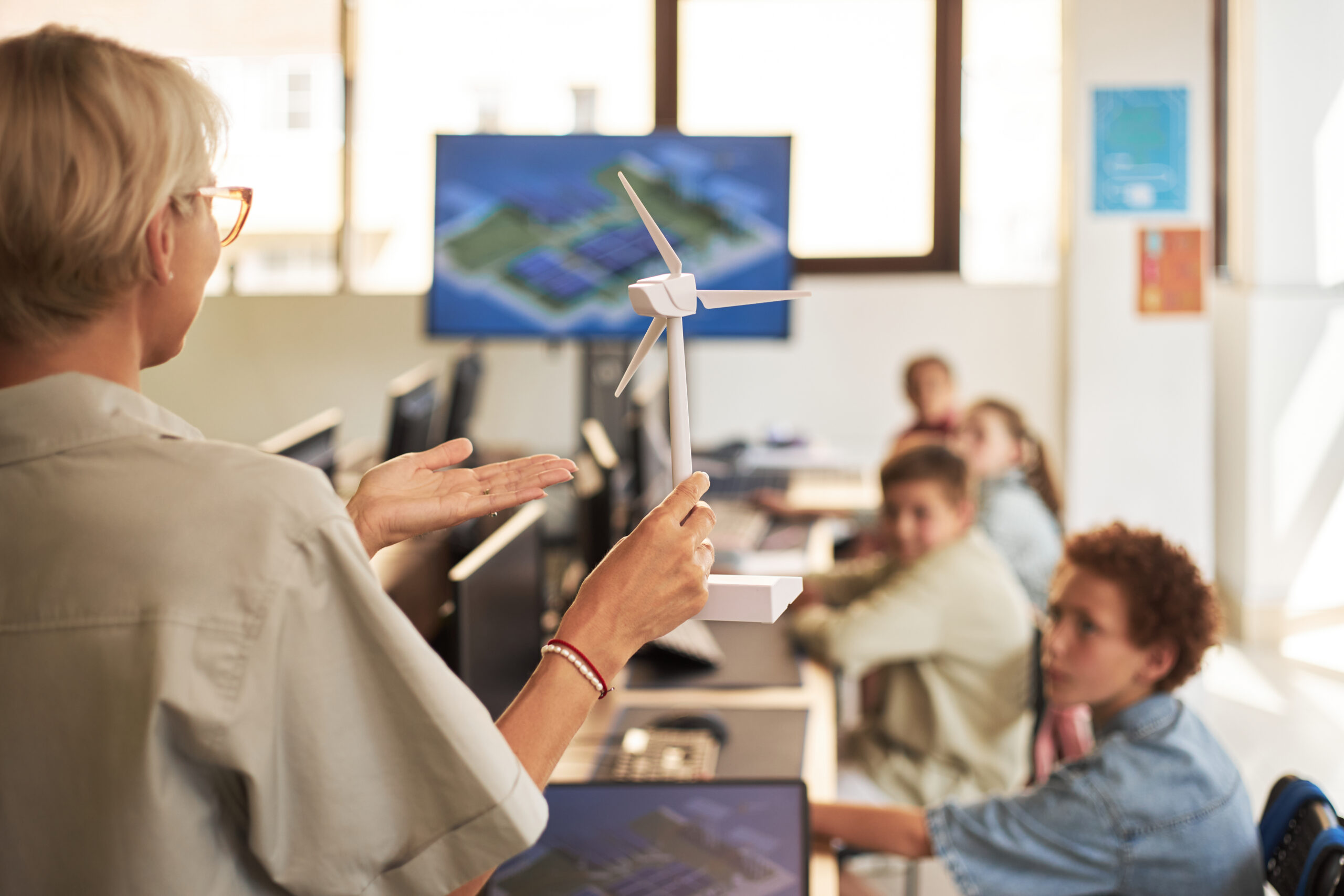
A Proven Approach to Teaching Unit 6
Foreword by Lynn Kistler
For the last 15 years of my 30-year teaching career, I taught AP Environmental Science, and it quickly became my favorite class. When I first started, I’ll admit I was overwhelmed. My background was not in biology, as so much of the course draws upon, but in chemistry and physics. But the moment we reached Unit 6: Energy Resources and Consumption, everything finally clicked. Energy was familiar territory, and for the first time, I felt fully grounded in the content.
Over time, I refined and adjusted my approach, but Unit 6 always felt distinct from the others. I found that it benefited from a different teaching style, one that relied heavily on clear visuals, real-world examples, and structured note-taking. When I first used the original Switch documentary, it was transformative. And when Switch Classroom launched in 2020, with a broader collection of classroom-ready videos, data sets, and computation exercises, my Unit 6 instruction elevated even further.
As a founding member of the Switch Teacher Advisory Council (TAC), I am proud that several of the APES resources now available on Switch Classroom grew from materials I created for my own students. I hope this Unit 6 plan offers clarity, inspiration, and practical tools as you guide students through the complex and fascinating world of energy.

Unit 6 at a Glance
| Focus | Instructional Emphasis | Key Outcomes |
|---|---|---|
| Day 1 | Surfacing Prior Knowledge | Reveal misconceptions and frame the core energy questions. |
| Day 2 | Building Energy Literacy | Establish foundational understanding of major energy sources. |
| Day 3 | Science of Electricity | Understand generators and electricity production. |
| Day 4 | Global Energy Distribution | Interpret global energy data and regional trends. |
| Day 5 | Energy Math and Computation | Build fluency with AP-style energy calculations. |
| Day 6 | Hands-On Exploration | Apply energy concepts through engineering and labs. |
| Day 7 | Personal Energy Use | Connect efficiency and consumption to student lives. |
| Day 8 | Synthesis and Debate | Evaluate energy trade-offs using evidence and argumentation. |
Unit Overview
| Day 1 | Materials |
|---|---|
| Surfacing Prior Knowledge Open with a discussion that surfaces students’ existing beliefs (correct or not) about energy. This step is essential because many misconceptions persist about fossil fuel depletion, renewable energy scalability, and nuclear safety. Some discussion questions include: – Where do you think most of the energy you use each day comes from? – Do you believe the world is running out of fossil fuels soon? Why or why not? – What are some challenges you think prevent renewable energy from replacing fossil fuels completely right now? – How do you think nuclear energy compares to fossil fuels in terms of environmental impact? – What factors do you think influence a country’s energy consumption? – If you wanted to reduce your personal energy footprint, what changes would be most effective? – Do you think the world can transition to fully sustainable energy? Why or why not? This conversation naturally leads into the Unit 6 Learning Objectives and helps students identify what they already understand and what they will learn. Phenomenon – Can We Make the Switch? Step 1: Show the first 3:44 of the Switch Complete Film and then introduce the phenomenon question: Can we make the switch? Have students discuss this idea in groups and then make a list of ideas on the board about their wonderings and questions. Step 2: Hand out APES: Unit 6 Note Taking Guide to the students. They may keep it in a designated folder or glue it into their notebooks. Step 3: Continue watching the Switch Complete Film. Watch each section on the various resources. After each section, have the students talk in groups to fill in sections of the Note Taking Guide, and discuss as a class. | – Unit 6 Objectives A few years ago, when the APES curriculum was updated, I began using this “objectives checklist” for each unit. Students consistently share that “checking the boxes” greatly improves their understanding and reveals gaps they may not have noticed. – Unit 6 Notetaking Guide I also provide a Unit 6 Note-taking Guide: a structured organizer where students track details about each energy source, its advantages, disadvantages, and environmental impacts. This consistency across the unit makes the content more manageable and reinforces key vocabulary and concepts. – Switch: The Complete Film |
| Day 2 | Materials |
|---|---|
| Building Energy Literacy with the “Science of” Videos In class, begin with the Science of Coal video (5 minutes). Students complete note pages while watching, then compare with a partner to fill in any gaps. Follow with a class discussion where students map the content directly onto the Unit 6 Learning Objectives—especially LO 6.3, 6.4, and 6.6 related to fossil fuels and coal extraction. Over the next few days, students complete the remaining videos—mostly outside of class. Switch Classroom does not yet include hydrogen fuel cells, so I supplement with a short lesson explaining how fuel cells work, along with their advantages and disadvantages (LO 6.13). I also recently authored the EarthDate background sheet Hydrogen from Rock,s which introduces students to natural hydrogen sources and explores how hydrogen can function as a clean fuel. It’s a great additional reading to support this topic. | “Science of” Videos: Understanding the basics of each energy source is foundational to Unit 6. Switch Classroom’s “Science of” videos deliver clear, concise explanations with videos that greatly enhance comprehension. – Science of Coal – Science of Oil – Science of Natural Gas – Science of Nuclear – Science of Hydropower – Science of Wind – Science of Solar – Science of Bioenergy – Science of Geothermal Teacher Tip: You can watch videos from YouTube, embed them in your LMS, or link directly to Switch Classroom. You can also contact the Switch Classroom team to get a downloadable video file. Additional Resource: – EarthDate: Hydrogen from Rocks |
| Day 3 | Materials |
|---|---|
| Science of Electricity Full Lesson Use the full Science of Electricity lesson to teach students all about generators and how we get electricity. | Science of Electricity Full Lesson – Bell Ringer – Video – Starter Pack – Reading – Computation – Data Set – Exit Ticket – Teacher Guide – Answer Key – Optional Lab: How Winding Affects Voltage (extra day) |
| Day 4 | Materials |
|---|---|
| Global Energy Distribution and Resource Distribution While students work independently on the videos and notes, class time is devoted to understanding how energy is consumed globally and how resource availability varies by region. These concepts appear frequently on the AP exam, often paired with graphs and tables. | Recommended Data Sets: – Science of Coal Data Set – Science of Hydropower Data Set – Science of Geothermal Data Set – Science of Oil Data Set These activities help students analyze real data, identify trends, and practice interpreting visuals—directly supporting LO 6.1 and 6.2. |
| Day 5 | Materials |
|---|---|
| Energy Math: Building AP Exam Confidence There is almost always at least one energy-math computation on the AP exam, and Switch Classroom’s computation modules are perfect for building familiarity and fluency. Each “Science of” lesson contains additional practice problems, and for students who want more, the APES Math Problems and Conversions Practice is a comprehensive resource. | Recommended Computation Modules: – Science of Nuclear Computation: dimensional analysis, percent difference, and half-life calculations – Science of Natural Gas Computation: dimensional analysis and efficiency calculations – Science of Oil Computation: cost comparisons and CO2 emissions for air vs. car travel – excellent real-world context Additional Resource: – APES Math Problems and Conversions Practice |
| Day 6 | Materials |
|---|---|
| Hands-On Exploration The Build a Windmill Hands-On from the Introduction to Wind lesson is a great way to give students a break from the steady pace of calculations, data analysis, and note-taking in Unit 6. Students build a simple windmill using recycled materials – water bottles, cardboard, and other repurposed items. This also provides a natural preview of Unit 8’s focus on solid waste disposal and waste reduction. As they experiment with blade shape, angle, and number of blades, students explore how design choices affect electricity generation, reinforcing engineering design and the real-world factors that influence wind energy efficiency. | – Build a Windmill Hands-On (Introduction to Wind) Here are a few more projects to make student learning more hands-on. – Investigative Lab: Wind Energy: In this lab, students learn how to use an anemometer to measure wind speed and use their data to calculate the wind energy potential of a wind turbine. – Water Pressure and Flow Lab: In this lab, students explore how the height of water affects flow rate and pressure, which are key principles behind how hydroelectric dams generate energy. – Mining Simulation Hands-On: This simulation engages students in exploring the real-world complexities of coal mining and coal-based power generation. – Cleaning Up an Oil Spill Investigative Lab: In this lab, students evaluate different materials and methods for cleaning oil spills by conducting an experiment to test their effectiveness. |
| Day 7 | Materials |
|---|---|
| Personal Energy Use Energy efficiency brings the math and concepts of Unit 6 into a personal context. The Home Electricity Audit has students examine an electric bill, calculate the energy use of household devices, and draw conclusions from their data—building quantitative and analytical skills they’ll use on the AP exam. | Videos: – Introduction to Efficiency – Science of Energy Efficiency Project: – Home Electricity Audit |
| Day 8 | Materials |
|---|---|
| Bringing It All Together To close the unit, I use the U.S. Energy Issues Debate, a synthesis activity that challenges students to apply everything they’ve learned about energy sources, trade-offs, consumption patterns, and environmental impacts. You may choose to: – Center the debate on a local or regional energy issue – Assign roles representing different stakeholders, – Have students support their arguments with data from Switch Classroom and other reputable sources (EIA, Our World in Data, etc) This activity reinforces higher-order thinking and prepares students for FRQs where they must evaluate environmental decisions from multiple perspectives. | – U.S. Energy Issues Debate Another synthesis activity that challenges students to apply their comprehensive knowledge of energy sources and trade-offs. – Energy Matchmaking Gallery Walk |
Final Thoughts
Unit 6 has always been the point in the year when students begin to understand the interconnected nature of environmental science. Energy ties together geology, climate, pollution, economics, and human development, and Switch Classroom makes these connections clearer and more accessible.
If you are new to teaching APES, I hope this plan offers structure and confidence. If you are a veteran teacher, I hope it provides inspiration or a fresh idea to incorporate. Either way, I encourage you to adapt these strategies to your students’ needs and make the unit your own.
Energy literacy is essential for the next generation — and you are helping build it.

Lynn Kistler is a former AP Environmental Science teacher with 30 years of classroom experience and the Program Specialist for Switch Classroom.