

Partie 1A : Test d’un circuit en série
Cliquez sur le lien pour ouvrir la simulation PhET Construire un circuit : CC. La simulation est disponible en français.
Cliquez sur l’onglet « Introduction ».
Notre objectif est de construire un circuit en série.
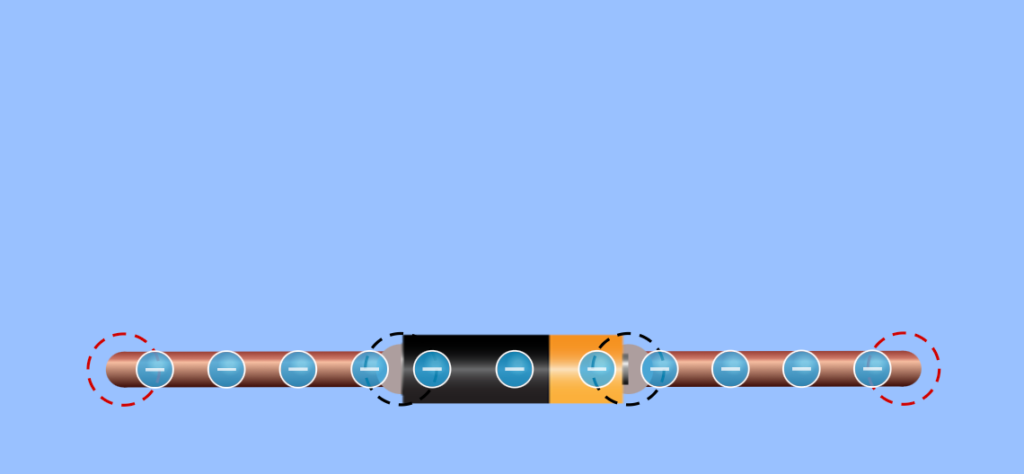
Étape 1 : Nous avons besoin d’une source d’électricité. Glissez une pile dans la zone de construction bleue (laissez de la place pour ajouter d’autres éléments).

Étape 2 : Nous avons maintenant besoin d’éléments qui transporteront l’électricité depuis la source (la pile). Ajoutez un fil électrique à droite de la pile et un autre à gauche. Assurez-vous que les fils touchent la pile.
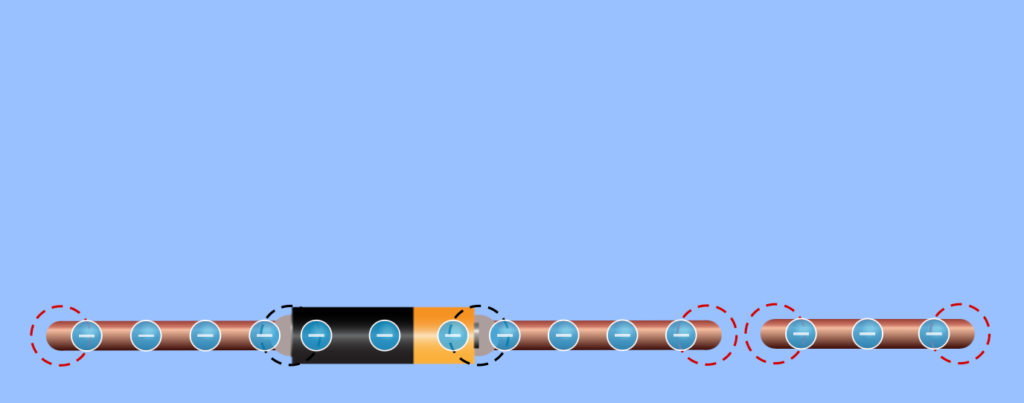
Étape 3 : Continuons à construire notre circuit. Ajoutez un autre fil à droite. Assurez-vous qu’il est bien connecté.
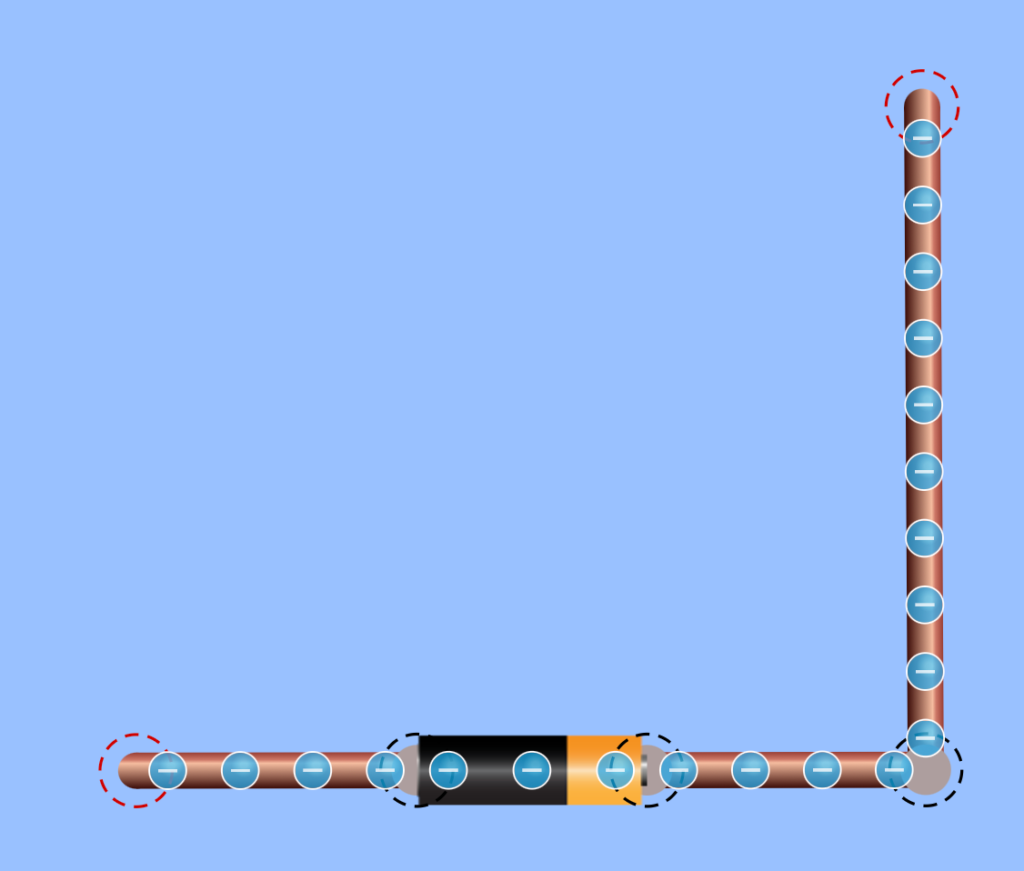
Étape 4 : Saisissez l’extrémité libre du fil et faites-la pivoter. Vous voudrez aussi l’étirer pour l’allonger. Le montage devrait ressembler à l’image.
Étape 5 : Répétez la même chose du côté gauche.
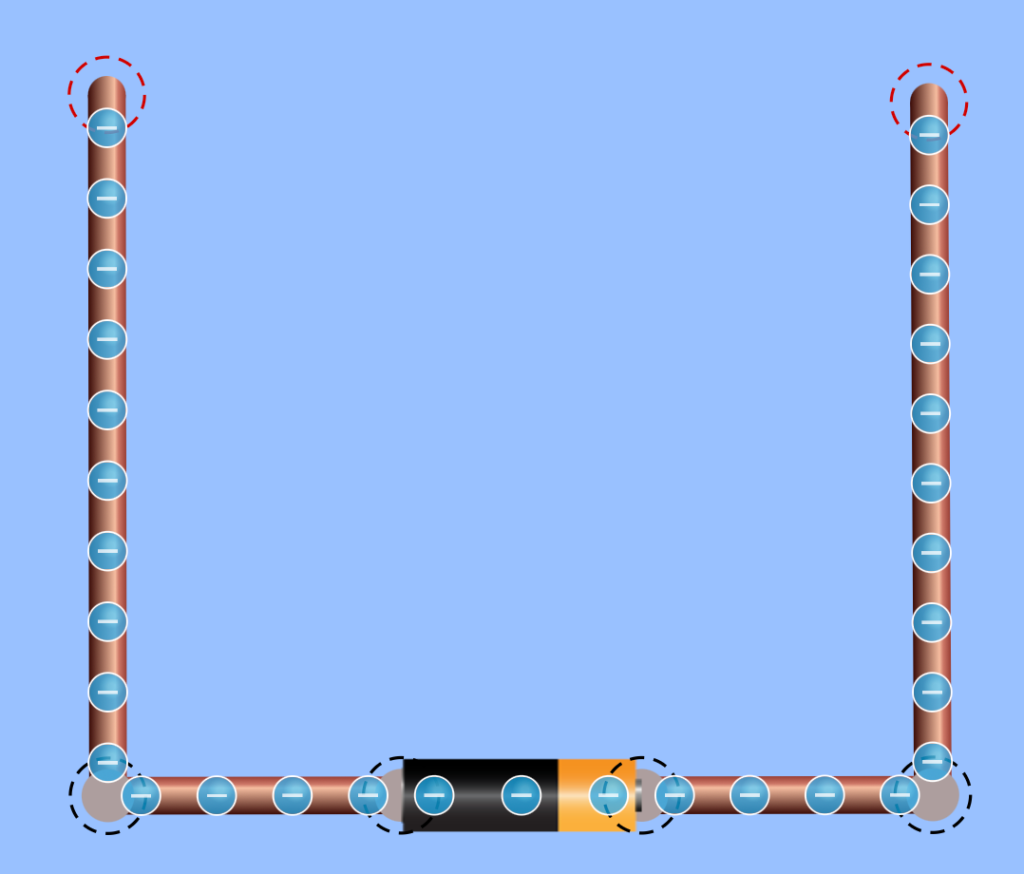
Étape 6 : Ajoutez deux autres fils en haut, comme sur l’image.
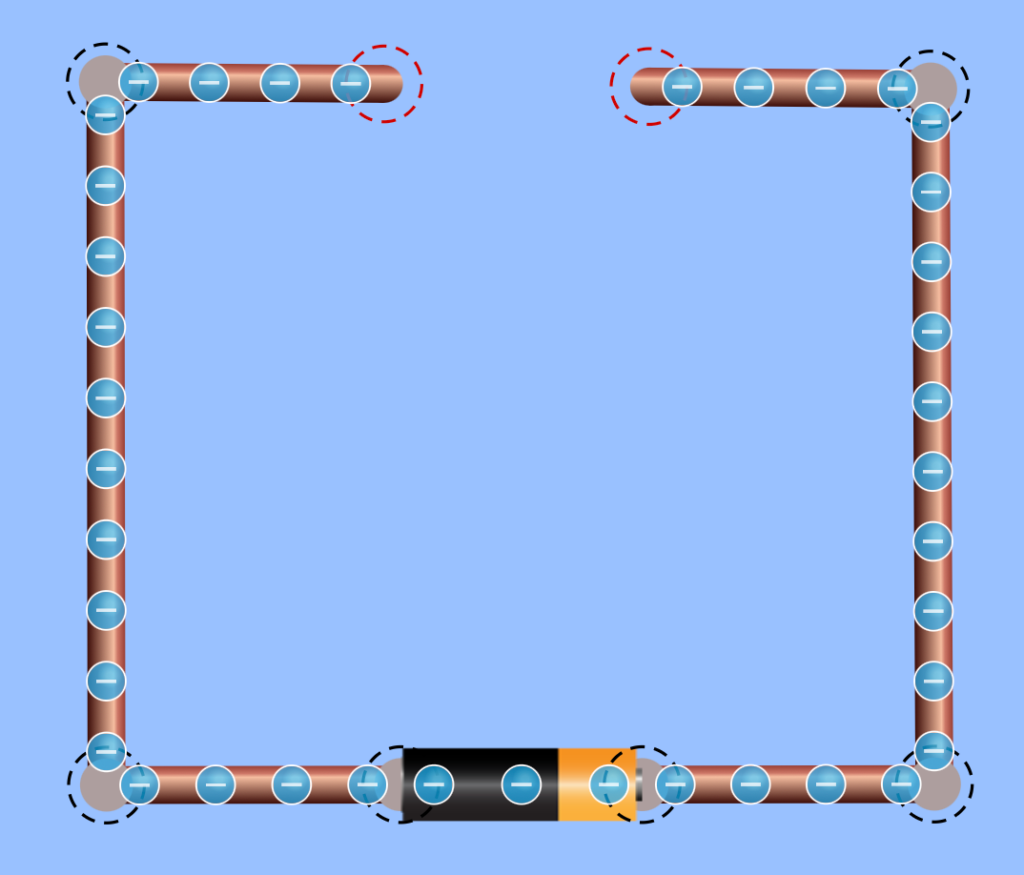
Étape 7 : Ajoutons maintenant la lampe. Glissez une lampe dans l’espace ouvert entre les deux fils du haut.
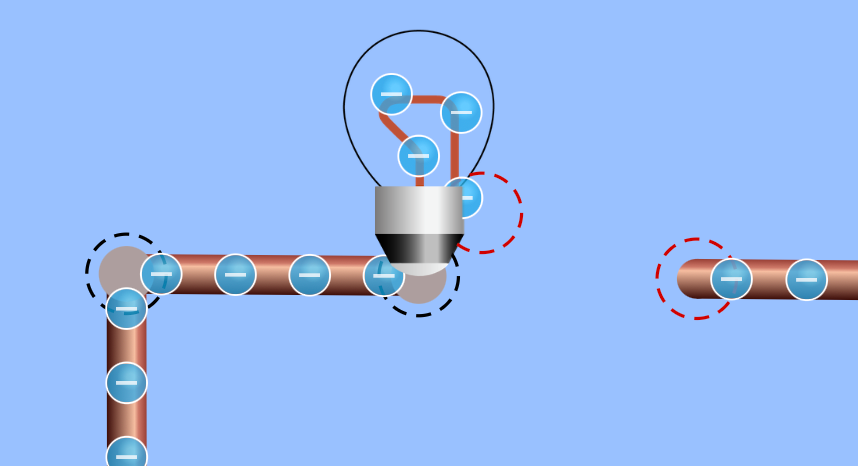
Étape 8 : Glissez le fil non connecté à droite vers le cercle de la lampe pour les relier.
Si le montage est correct, la lampe s’allumera et vous verrez les électrons circuler lentement.
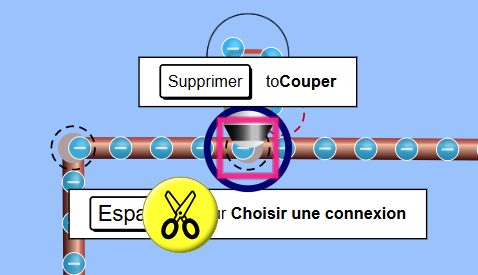
*Si vous faites une erreur, vous pouvez cliquer sur l’« erreur » et une paire de ciseaux apparaîtra. Cliquez sur les ciseaux pour effacer l’erreur et la corriger.
Félicitations ! Vous avez construit un circuit en série !
Indice : Portez attention à la luminosité de la lampe.
Partie 1B : Approfondissons nos apprentissages
Étape 1 : Cliquez sur le cercle à gauche de la lampe : des ciseaux apparaîtront. Cliquez sur les ciseaux pour détacher le fil de la lampe.
Étape 2 : Raccourcissez le fil de gauche. Faites la même chose à droite avec la lampe et le fil.
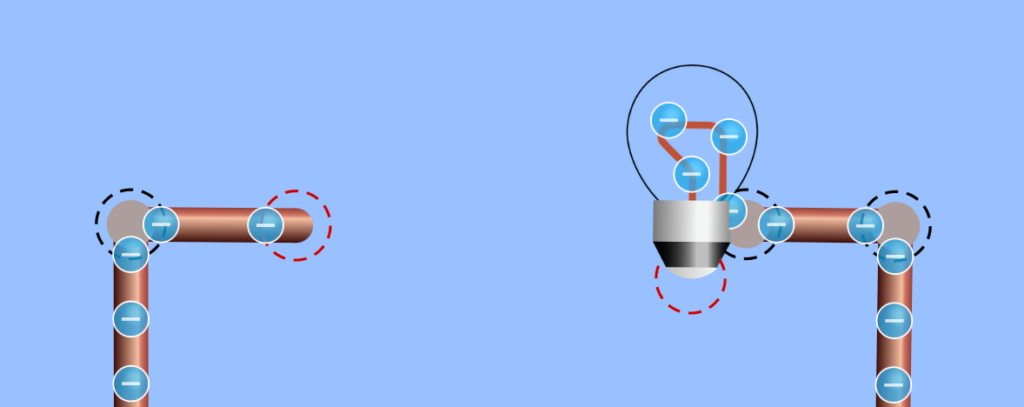
Étape 3 : Ajoutez une lampe du côté gauche. Le montage devrait ressembler à l’image.
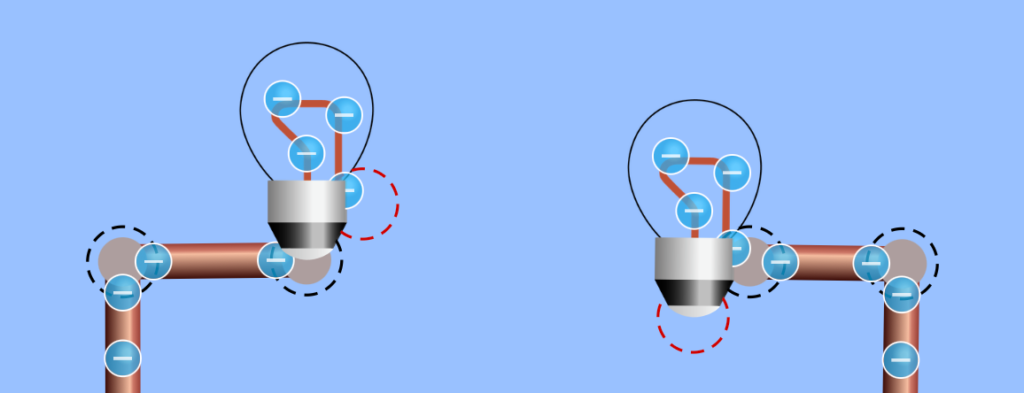
Étape 4 : Glissez un fil dans l’espace entre les deux lampes et reliez le fil à chaque lampe.
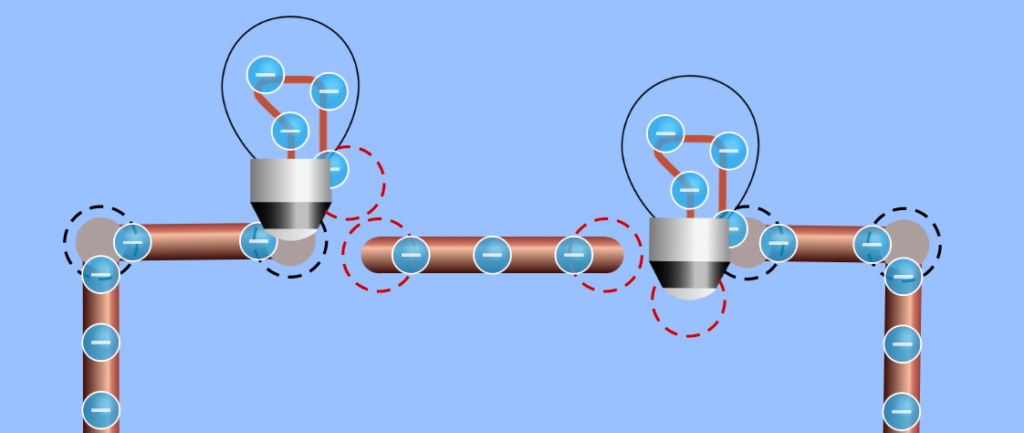
Répondez aux questions
A. Quel circuit produisait des lampes plus brillantes ? Le premier circuit avec une seule lampe, ou le deuxième circuit avec deux lampes ?
B. Cliquez sur la pile, puis cliquez sur les ciseaux pour déconnecter la pile. Qu’arrive-t-il aux deux lampes ?
Partie 1C : Explorons nos apprentissages
Étape 1 : Essayez d’ajouter une 3e lampe en haut du circuit en coupant et en ajoutant des fils, puis en ajoutant une 3e lampe. Quand vous avez terminé, montrez votre montage à votre enseignant.
Répondez aux questions
A. Quel circuit produisait des lampes plus brillantes ? Le deuxième circuit avec deux lampes ou le troisième circuit avec trois lampes ?
B. Cliquez sur la pile, puis cliquez sur les ciseaux pour déconnecter la pile. Qu’arrive-t-il à toutes les lampes ?
C. Reconnectez la pile et fermez le circuit pour que les lampes se rallument. Pensez-vous que déplacer une des lampes plus loin vers la droite, une vers le haut et la troisième vers la gauche aura un effet sur le fait qu’elles restent allumées ou non ? Expliquez votre réponse.
D. Testez votre hypothèse en déplaçant les lampes. Est-ce que les trois lampes sont restées allumées ?
E. Si vous retiriez seulement une lampe, est-ce que les autres lampes pourraient rester allumées ? Expliquez votre réponse.
F. Testez votre hypothèse en retirant une des lampes. Cliquez sur une des lampes, puis cliquez sur les ciseaux pour la retirer. Qu’est-il arrivé aux autres lampes ?
Partie 2A : Test d’un circuit parallèle
Étape 1 : Cliquez sur le bouton de réinitialisation dans le coin inférieur droit.
Étape 2 : Ajoutez une pile et des fils comme dans le circuit précédent, pour obtenir un montage comme celui-ci. Assurez-vous qu’il y a de l’espace au-dessus de votre montage pour ajouter d’autres fils.
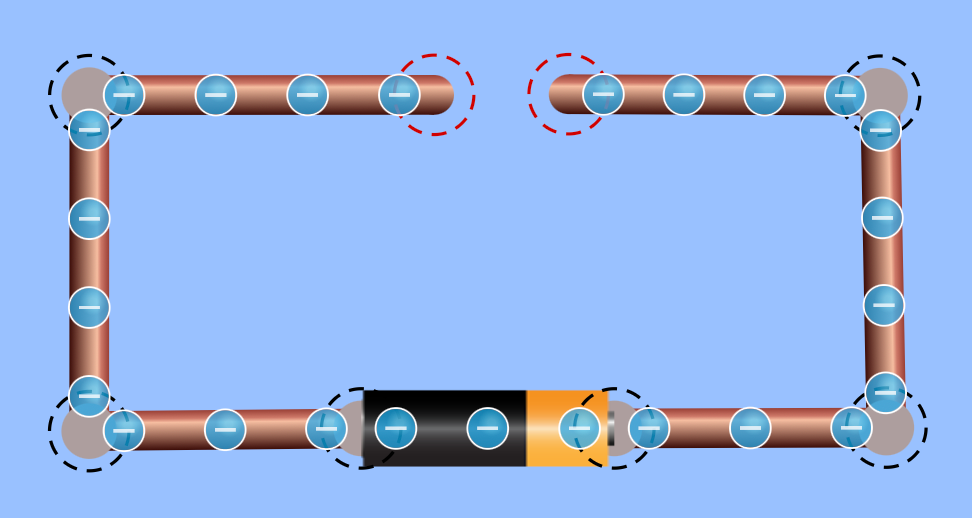
Étape 3 : Fixez de nouveau une lampe entre les fils du haut pour qu’elle s’allume. Ensuite, ajoutez quatre autres fils au-dessus, pour que votre circuit parallèle ressemble maintenant à ceci.
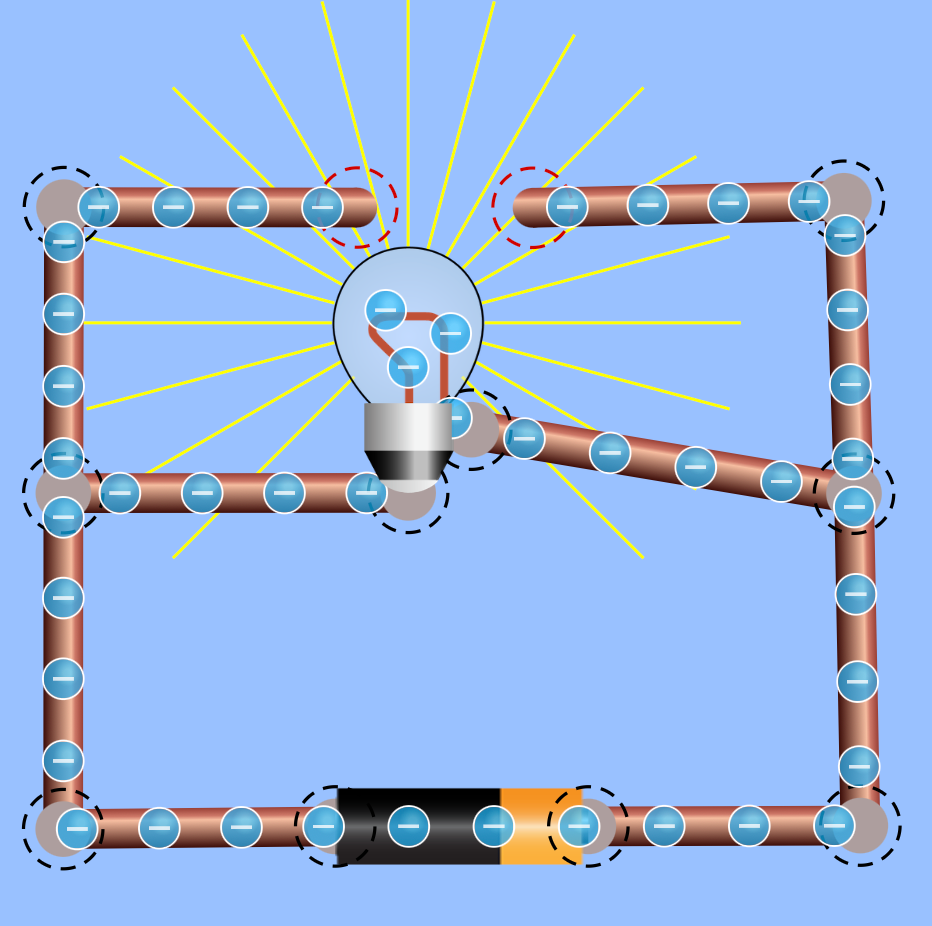
Étape 4 : Fixez maintenant une deuxième lampe dans l’espace entre les deux fils du haut.
Remarquez la luminosité des lampes !
Étape 5 : Ajoutez quatre autres fils, pour que votre circuit parallèle ressemble maintenant à ceci.
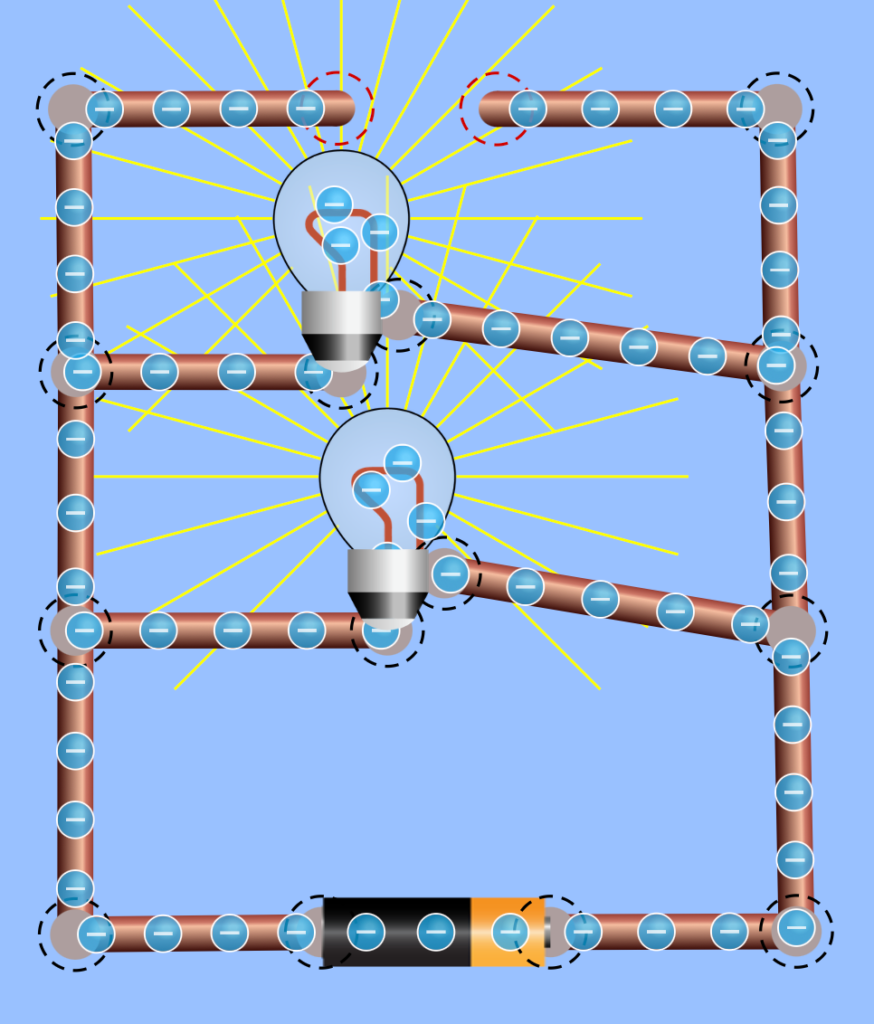
Étape 6 : Fixez maintenant une troisième lampe dans l’espace entre les fils du haut.
Remarquez la luminosité des trois lampes !
Partie 2B : Vérification des concepts
A. Quand on ajoute des lampes à un circuit parallèle, les lampes (garderont / ne garderont pas) la même luminosité.
B. Quand on ajoute des lampes à un circuit en série, les lampes (garderont / ne garderont pas) la même luminosité.
C. Dans le circuit parallèle, que pensez-vous qu’il arrivera aux deux autres lampes si vous retirez une lampe ?
- Elles s’éteindront toutes les deux.
- Elles deviendront toutes les deux plus brillantes.
- Elles resteront toutes les deux allumées.
- Elles deviendront toutes les deux plus faibles.
D. Testez votre hypothèse. Cliquez sur une des lampes : une poubelle apparaîtra au bas de la page. Cliquez sur la poubelle pour retirer la lampe.
Qu’est-il arrivé aux deux autres lampes ?
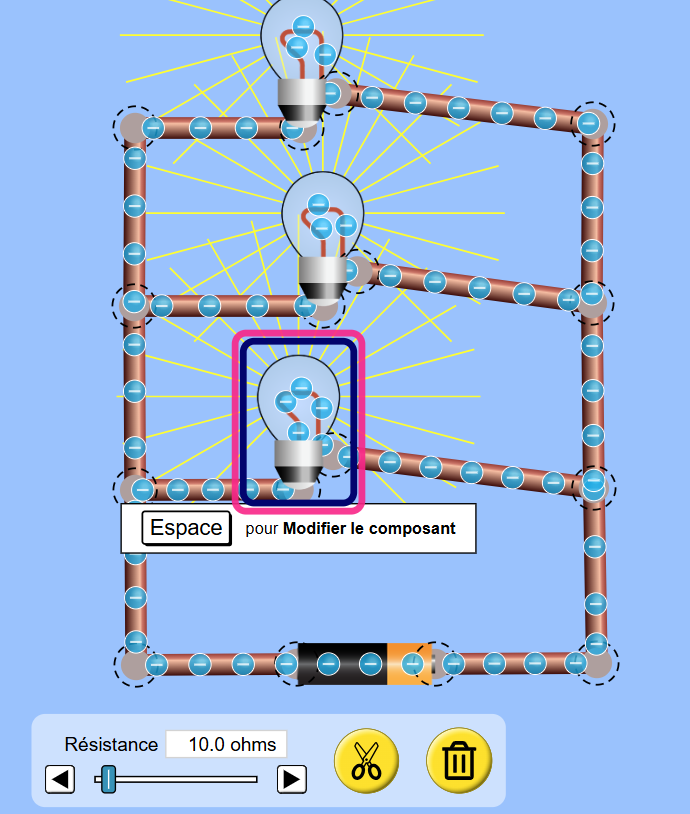
E. Expliquez pourquoi, selon vous, les deux lampes sont restées allumées dans le circuit parallèle quand une lampe a été retirée, alors que dans un circuit en série, elles se sont toutes éteintes.
F. Dessinez.
| Un circuit en série avec 5 lampes | Un circuit parallèle avec 5 lampes |
Partie 3 : Isolants et conducteurs
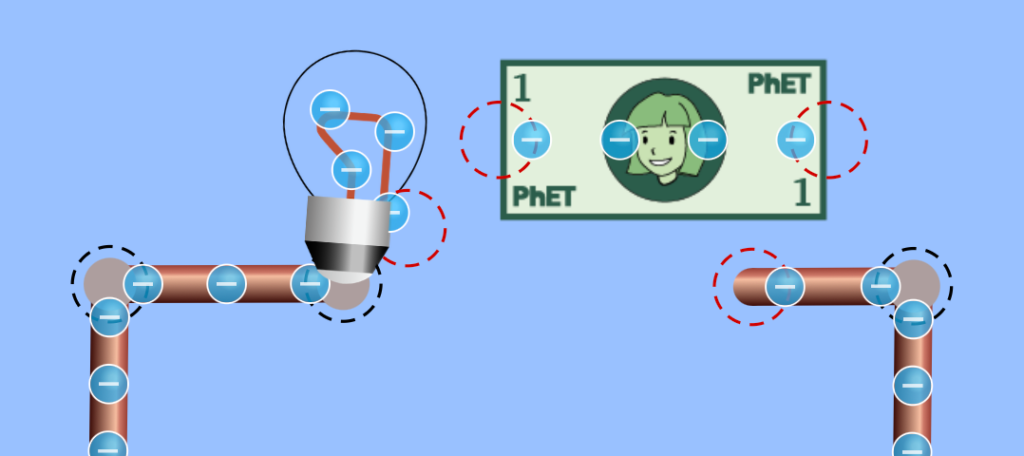
Étape 1 : Construisez un circuit en série simple comme dans la Partie 1. Ajoutez une lampe, mais ne fermez pas le circuit. Gardez un espace entre la lampe et le fil de gauche, comme sur l’image.
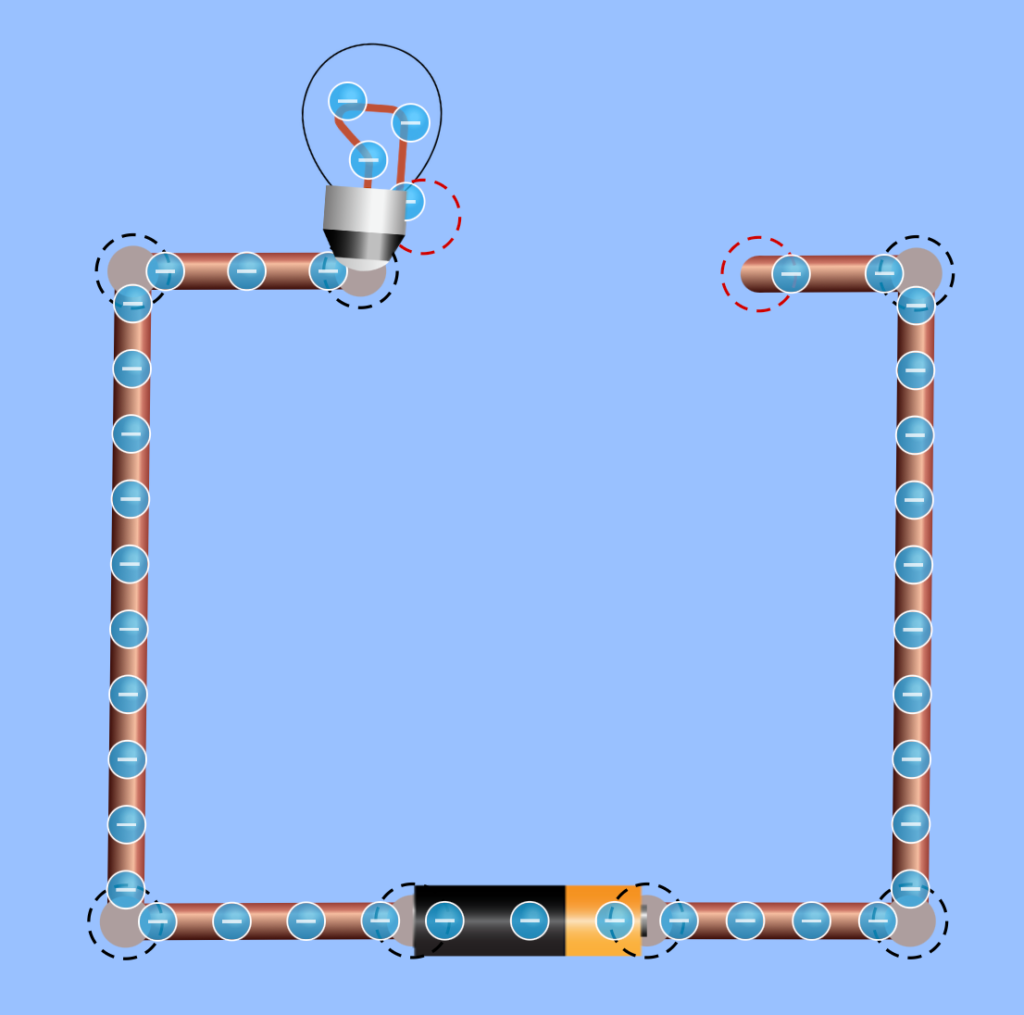
Étape 2 : Faites défiler la liste d’éléments à gauche de l’écran.
Étape 3 : Trouvez le billet de banque et glissez-le dans l’ouverture du circuit. Reliez les fils aux deux côtés du billet. Est-ce que la lampe s’est allumée ? (Oui/Non)
Notez vos résultats dans le tableau de données ci-dessous.
Étape 4 : Cliquez sur le billet de banque, puis cliquez sur la poubelle pour le retirer.
Étape 5 : Sélectionnez l’élément suivant, le trombone, et placez-le dans l’espace. Reliez les fils. Est-ce que la lampe s’est allumée ? Notez vos résultats dans le tableau de données ci-dessous.
Rappelez-vous : un conducteur est un matériau qui laisse circuler facilement l’électricité et la chaleur. Un isolant est un matériau qui bloque ou freine la circulation de l’électricité.
Étape 6 : Répétez le processus (retirer un élément, connecter le suivant) jusqu’au dernier élément, le crayon fin.
Tableau de données 1 : Isolants et conducteurs
| Élément | Est-ce que la lampe s’est allumée ? (Oui/Non) | Est-ce que le courant électrique a circulé à travers l’élément ?(Oui/Non) | L’élément est-il un conducteur ou un isolant ? |
|---|---|---|---|
| Billet de banque | |||
| Trombone | |||
| Pièce de monnaie | |||
| Fil électrique | |||
| Gomme | |||
| Gomme | |||
| Crayon fin |
Vérification des concepts
A. Les isolants (laissent / ne laissent pas) circuler le courant électrique à travers eux.
B. Les conducteurs (laissent / ne laissent pas) circuler le courant électrique à travers eux.
Partie 4 : Courant, résistance et tension
Partie 4A : Qu’est-ce qui contrôle la circulation du courant électrique ?
Nous pouvons voir les électrons se déplacer, mais comment pouvons-nous mesurer la quantité de courant électrique qui circule ? Le courant électrique est le déplacement de charges électriques dans un circuit. Son intensité se mesure en unités appelées ampères (A). Un ampèremètre mesure l’intensité du courant électrique en ampères.
Objectif d’apprentissage : Je peux mesurer l’intensité du courant dans un circuit à l’aide d’un ampèremètre.
Faites des prédictions :
A. Est-ce que l’intensité du courant sera différente dans le fil avant la lampe ?
B. Est-ce que l’intensité du courant sera différente dans la lampe ?
C. Est-ce que l’intensité du courant sera différente dans le fil après la lampe ?
Étape 1 : Construisez un circuit en série simple : Pile → Fil → Lampe → Fil → Retour à la pile. Assurez-vous que la lampe s’allume.
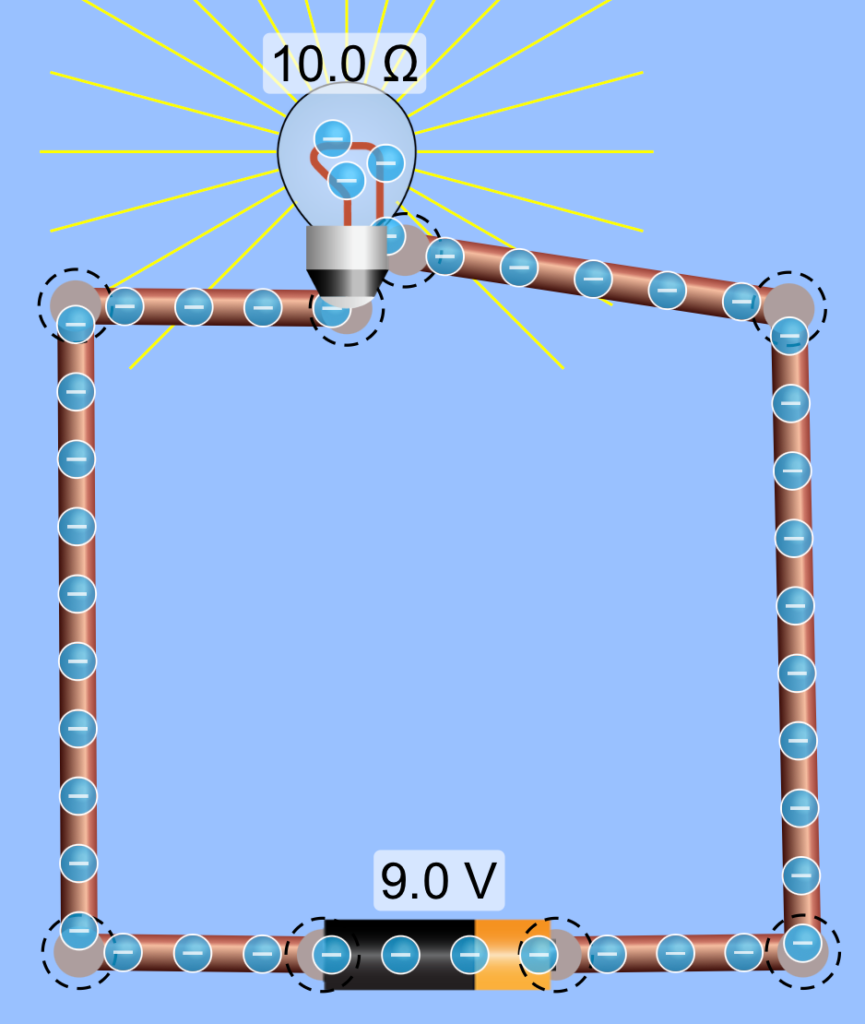
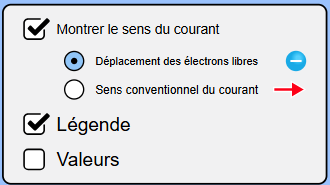
Étape 2 : Dans la boîte du coin supérieur droit, assurez-vous que toutes ces options sont cochées : « Montrer le sens du courant », « Déplacement des électrons libres », « Légende » et « Valeurs ».
Étape 3 : Glissez l’outil ampèremètre sur l’écran. L’ampèremètre est l’outil orange qui indique « Intensité ».

Étape 4 : Glissez la sonde de l’ampèremètre à l’endroit où le fil et la lampe se rejoignent, du côté droit. Notez la valeur de l’intensité dans le tableau ci-dessous.
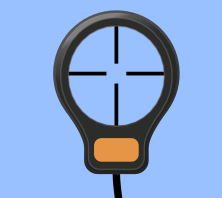
Étape 5 : Glissez ensuite la sonde à la jonction fil/lampe du côté gauche, et notez la donnée. Continuez à déplacer la sonde aux autres endroits indiqués dans le tableau, et notez vos données.
Tableau de données 2 : Intensité du courant
| Endroit dans le circuit | Intensité (ampères) |
|---|---|
| Jonction fil/lampe, côté droit | |
| Jonction fil/lampe, côté gauche | |
| Jonction fil/pile, côté droit | |
| Jonction fil/pile, côté gauche | |
| N’importe quel endroit sur un fil (côté droit) | |
| N’importe quel endroit sur un fil (côté gauche) |
Partie 4B : Qu’est-ce qui influence la circulation du courant électrique ?
Objectif d’apprentissage : Je peux étudier comment l’ajout d’un résistor influence la circulation du courant électrique dans un circuit.
Faites une prédiction
A. Supposons que nous ajoutons une sorte de « ralentisseur » électrique à notre circuit. Que pensez-vous qu’il arrivera au courant ?
- L’intensité du courant augmentera.
- L’intensité du courant diminuera.
- L’intensité du courant restera la même.
Étape 1 : Construisez un circuit en série simple : Pile → Fil → Lampe → Fil → Retour à la pile. Assurez-vous que la lampe s’allume.
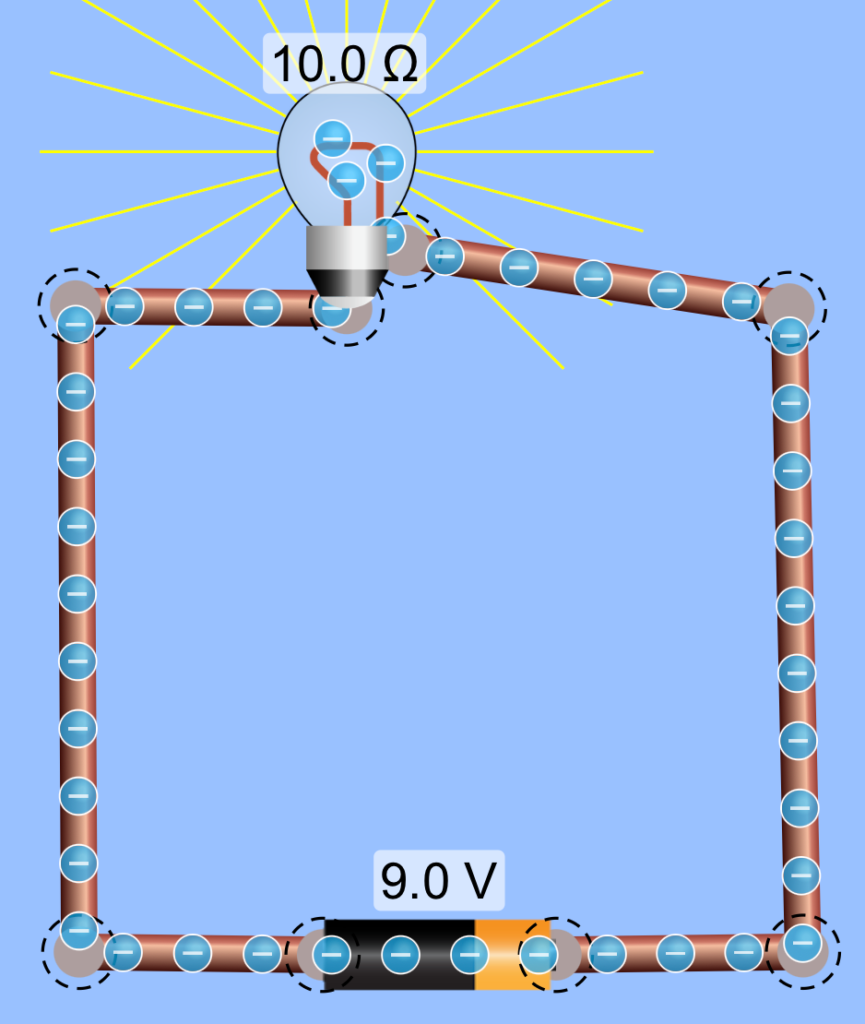
Étape 2 : Dans la boîte du coin supérieur gauche, assurez-vous que toutes ces options sont cochées : « Montrer le sens du courant », « Déplacement des électrons libres », « Légende » et « Valeurs ».
Étape 3 : Gardez la sonde de l’ampèremètre sur un fil pour qu’il affiche une valeur. La lampe devrait afficher une résistance de 10 Ω.
Étape 4 : Coupez la lampe et cliquez sur la poubelle pour la retirer. Remplacez-la par un résistor de la liste d’éléments à gauche. Le montage devrait ressembler à ceci.
Un résistor est un composant qui limite la circulation du courant électrique dans un circuit. Il aide à protéger les autres composants et contrôle la quantité de courant qui peut circuler.
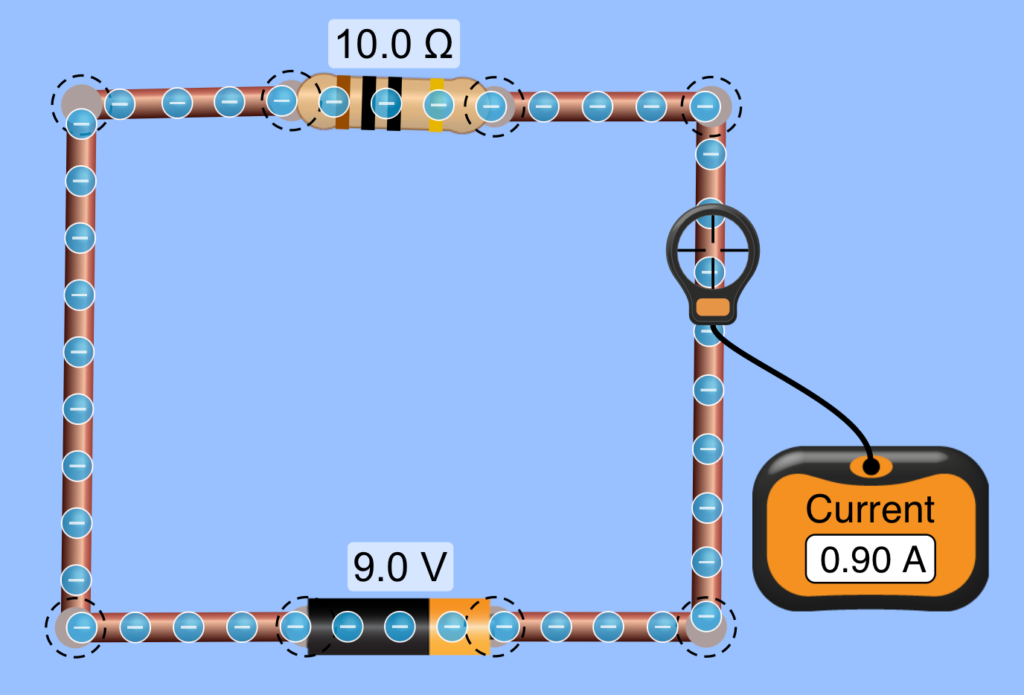
Étape 5 : Cliquez sur le résistor : vous devriez voir le curseur de résistance au bas de la page.
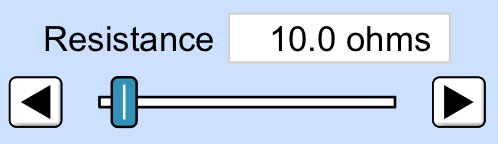
Étape 6 : Glissez le curseur ou utilisez les flèches pour régler la résistance à 5 ohms. Notez la donnée dans le tableau ci-dessous.
Étape 7 : Réglez la résistance à chacune des valeurs (ohms) du tableau, et notez l’intensité (ampères).
Tableau de données 3 : Résistance et intensité du courant
| Résistance (ohms) | Intensité (ampères) |
|---|---|
| 10 ohms | |
| 5 ohms | |
| 20 ohms | |
| 30 ohms | |
| 40 ohms | |
| 50 ohms |
Répondez à la question
B. Quelle est la relation entre la résistance et l’intensité du courant ?
C. Quand la résistance (augmente / diminue), la quantité de courant électrique qui circule dans un circuit, mesurée en ampères, (augmentera / diminuera).
Partie 4C : À la découverte de la loi d’Ohm
Objectif d’apprentissage : Je peux utiliser la tension, l’intensité du courant et la résistance pour prédire comment l’électricité circule dans un circuit.
Les scientifiques ont découvert une relation simple entre les trois quantités que nous étudions : la tension, l’intensité du courant et la résistance.
- La tension est la « poussée » électrique qui déplace les charges électriques.
- L’intensité du courant est la quantité de courant électrique qui circule dans un circuit.
- La résistance s’oppose à la circulation du courant électrique ou la ralentit.
Ces trois quantités fonctionnent toujours ensemble.
Étape 1 : Regardez votre tableau. Reportez les données de la colonne Intensité (ampères) ci-dessus.
Pour remplir la colonne Relation mathématique, étudiez les colonnes Résistance et Intensité. Les scientifiques cherchent souvent des régularités mathématiques dans les données. Pouvez-vous trouver une relation mathématique entre les deux ? Utilisez l’addition, la soustraction, la multiplication ou la division pour comparer les valeurs. Notez tout ce que vous remarquez.
Tableau de données 4 : Ohms et ampères
| Résistance (ohms) | Intensité (ampères) | Mathematical Relationship |
|---|---|---|
| 10 Ohms | ||
| 5 Ohms | ||
| 20 Ohms | ||
| 30 Ohms | ||
| 40 Ohms | ||
| 50 Ohms |
Répondez à la question :
A. Quel nombre obtenez-vous chaque fois ? Que pourrait représenter ce nombre dans votre circuit ?
Partie 4D : Que se passe-t-il quand la « poussée » électrique change ?
Objectif d’apprentissage : Je peux étudier comment un changement de tension influence l’intensité du courant dans un circuit.
Faites une prédiction
A. Que pensez-vous qu’il arrivera si nous augmentons la tension de la pile tout en gardant le même résistor ?
- L’intensité du courant augmentera.
- L’intensité du courant diminuera.
- L’intensité du courant restera la même.
Étape 1 : Réglez le résistor à 10 Ω. (Ne le changez plus.)
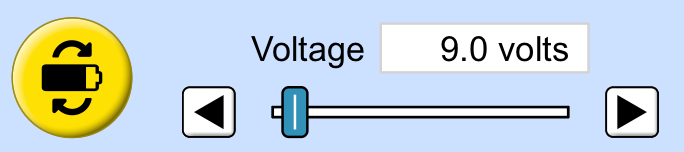
Étape 2 : Cliquez sur la pile pour pouvoir modifier sa tension, et remplissez le tableau ci-dessous.
Tableau de données 5 : Tension, résistance et intensité du courant
| Tension (volts) | Résistance (ohms) | Intensité (ampères) |
|---|---|---|
| 3 | 10 | |
| 6 | 10 | |
| 9 | 10 | |
| 15 | 10 | |
| 18 | 10 | |
| 21 | 10 |
Répondez aux questions
B. Quand la tension a changé, qu’est-il arrivé à l’intensité du courant ?
Quand la tension (a augmenté / a diminué), l’intensité du courant (a augmenté / a diminué).
C. Est-ce que l’intensité du courant augmente de la même quantité chaque fois ? Expliquez.
D. Pouvez-vous trouver une relation mathématique entre la tension et l’intensité du courant ? Essayez de multiplier ou de diviser les valeurs du tableau. Notez tout ce que vous remarquez.
Tirez une conclusion
E. Complétez l’équation :
Intensité du courant = _________________________ ÷ _________________________
F. Si l’intensité du courant est égale à la tension divisée par la résistance, comment pouvez-vous calculer la tension ? Complétez les équations :
Tension = _________________________ _____ _________________________
Résistance = _________________________ _____ _________________________