Three Environmental Degrees, Explained for Your Students

If you’re a high school teacher, your students have probably started thinking about what they want to study in college. If they’re passionate about the environment, there are so many amazing career paths they could take, which is exciting…but also overwhelming at times. As their teacher, you’ve seen their energy and potential, and you’ve helped them develop their skills to get to this point. How can you support them in deciding which degree is the right fit?
Breaking Down the Difference
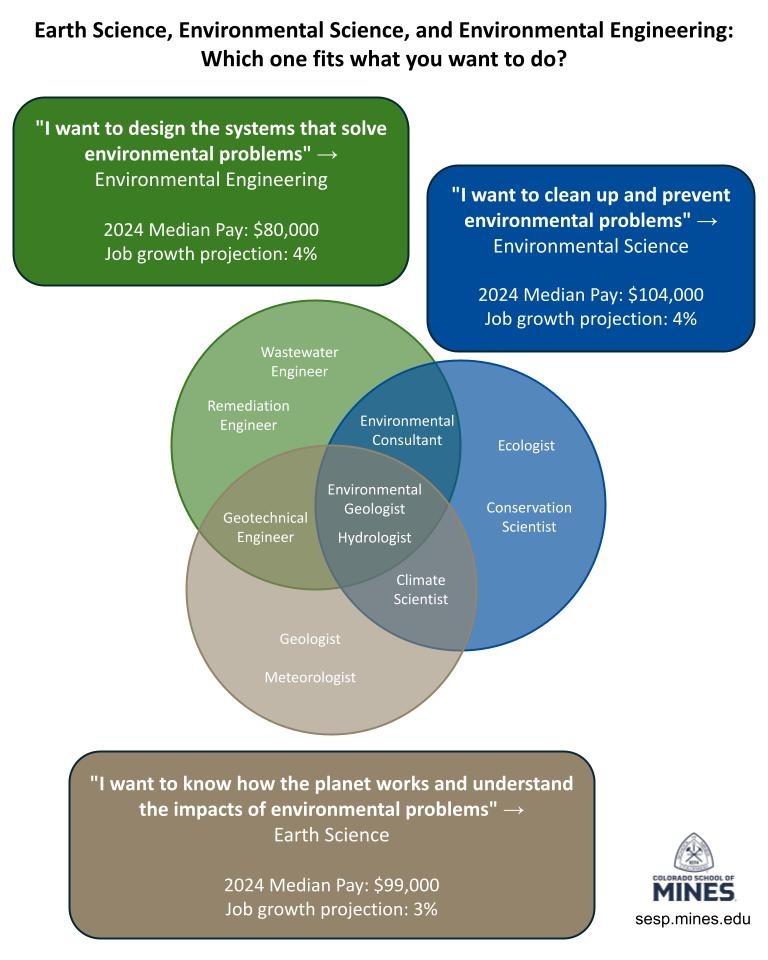
To help answer this question, Colorado School of Mines created a resource for us to share with educators. This quick guide for students explains the difference between the three main environmental degrees: Environmental Science, Environmental Engineering, and Earth Science.
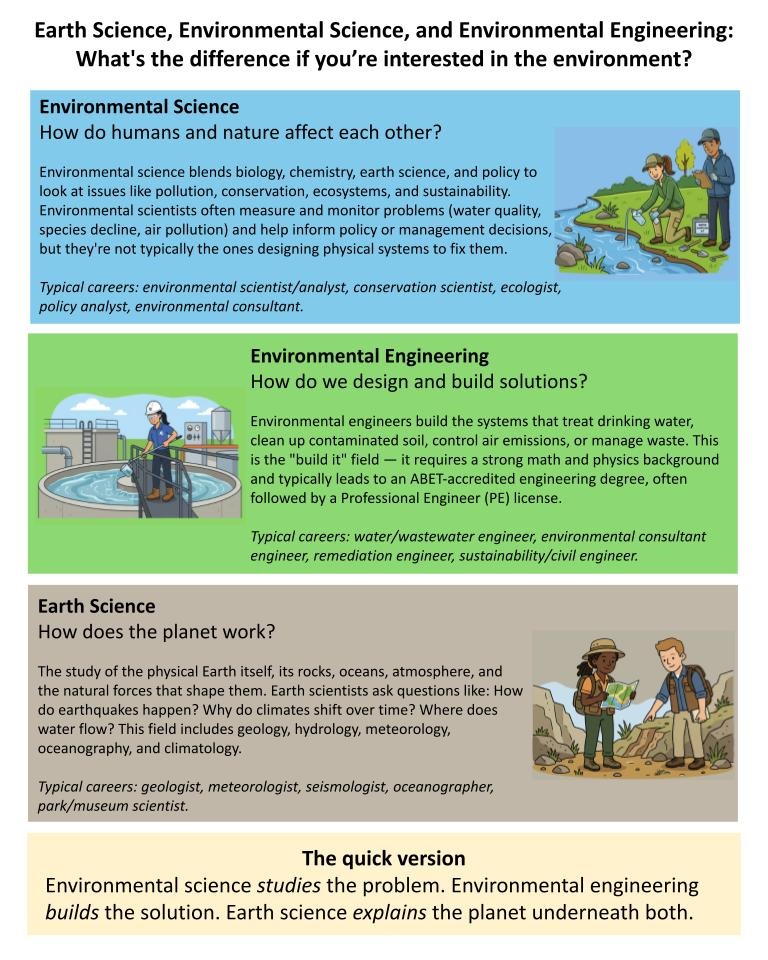
All three options are great for students who care about the environment, but each degree offers something unique. The best path depends on your student’s specific skill set and what they most love to do. Do they love taking things apart and figuring out how they work? They might be an environmental engineer. Do they love collecting rocks and exploring the outdoors? They might be an earth scientist.
Still Unsure?
There is also plenty of intersection between the three. If they’re interested in more than one potential degree, there are many careers that allow them to utilize skills from multiple areas of study.