

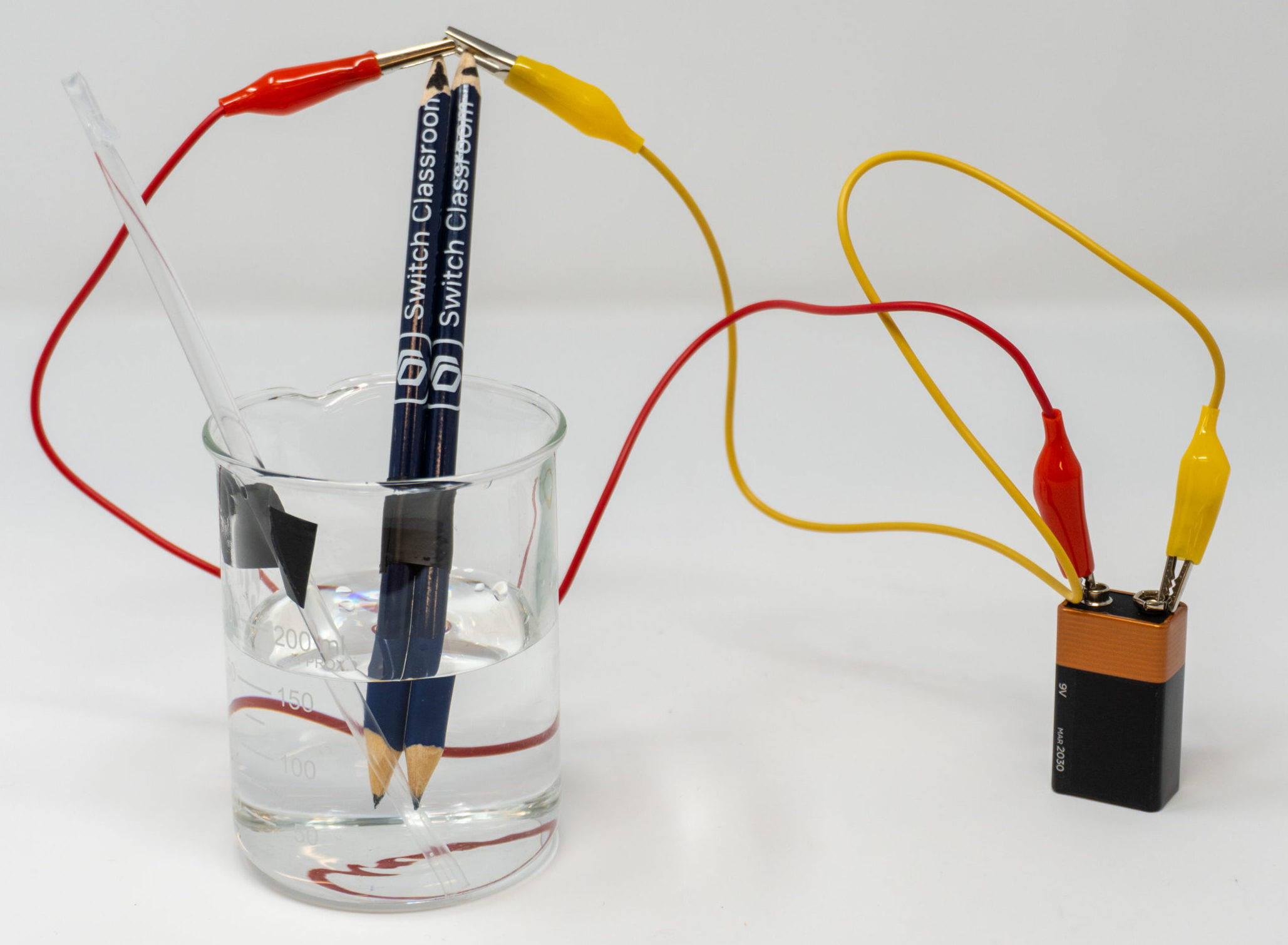
Provides the background, materials, safety considerations, procedure, and answer key needed to facilitate both the reading and the lab components of the lesson.
Hydrogen Power: Exploring Electrolysis
Summary
In this lesson, students investigate hydrogen as an energy carrier by examining how different production methods result in different levels of carbon dioxide emissions, then build and operate a simple electrolytic cell to observe hydrogen production firsthand. The paired teacher guide and student handout include background readings, comprehension questions, a step-by-step lab procedure, and analysis questions. Designed for high school chemistry, Earth and Environmental Science, or an APES energy unit.
Activities
Handout
Use this student guide to introduce hydrogen as an energy carrier and help students explore how hydrogen can be produced through different processes with different environmental impacts.
Audio
EarthDate Extension – The Essential Element. This audio and reading resource provides additional context on how hydrogen fuels the sun, launches rockets, and may become a key source of clean energy on Earth.
Downloadables