APES Unit 6 Alignment Guide

Summary

AP Environmental Science Unit 6 Resource Collection: Energy Resources and Consumption (CED-Aligned)

This AP Environmental Science Unit 6 resource collection is designed to support teachers as they plan, teach, and review Unit 6: Energy Resources and Consumption using the AP Environmental Science Course and Exam Description (CED). The collection brings together classroom-ready lessons and activities that help students understand energy systems while building skills needed for AP Exam success.

This collection was created by Lynn Kistler, a former AP Environmental Science teacher with over 30 years of classroom experience. The resources reflect a deep understanding of how Unit 6 content appears in the classroom and on the AP Exam, with a focus on common student challenges and high impact instructional strategies.

Resources in this collection align directly to Unit 6 topics and science practices outlined in the CED. Lessons emphasize how different energy sources are produced and used, how environmental and economic trade-offs are evaluated, and how energy decisions connect to sustainability and policy. Students practice analyzing data, comparing systems, and applying evidence-based reasoning, all of which are central to Unit 6 exam questions.

Teachers can use this collection to:

  • Introduce and reinforce Unit 6 concepts during instruction

  • Provide applied practice using real-world energy examples

  • Support review and exam preparation with CED-aligned tasks

Many resources emphasize quantitative reasoning and Claim Evidence Reasoning style responses that mirror the expectations of the AP Environmental Science Exam. This collection is intended to complement existing curricula and help teachers target Unit 6 content efficiently while maintaining strong alignment to the CED.

For more information on Lynn’s approach to teaching Unit 6, read her blog post here: APES Unit 6 Switch Classroom Guide.


Resources
APES Objectives - Unit 6

Exam Prep

Lynn introduces Unit 6 using this objectives checklist, so students clearly understand what they are expected to learn in the APES curriculum. Students consistently share that “checking the boxes” greatly improves their understanding and reveals gaps they may not have noticed.

APES Unit 6 Note Taking Guide

Exam Prep

Lynn uses this structured note-taking guide consistently throughout Unit 6. Students track details about each energy source, its advantages, disadvantages, and environmental impacts. This consistency across the unit makes the content more manageable and reinforces key vocabulary and concepts.

Switch: The Complete Film

Lynn shows the first 3:44 of the Switch Complete Film and then introduces the phenomenon question: Can we make the switch? Students discuss this idea in groups and then make a list of ideas on the board about their wonderings and questions. As students continue watching the film, they talk in groups to fill in sections of the Note Taking Guide.

Science of Coal

LO 6.3, 6.4, and 6.6

Lynn begins the Science of video sequence with coal during class. Students complete note pages while watching, then compare with a partner to fill in any gaps. Follow with a class discussion where students map the content directly onto the Unit 6 Learning Objectives—especially LO 6.3, 6.4, and 6.6 related to fossil fuels and coal extraction.

Science of Oil

LO 6.3, 6.4, and 6.6

Understanding the basics of each energy source is foundational to Unit 6. Switch Classroom’s “Science of” videos deliver clear, concise explanations with videos that greatly enhance comprehension. This lesson is typically assigned outside of class once students are comfortable with the note-taking format.

Science of Natural Gas

LO 6.3, 6.4, and 6.6

Understanding the basics of each energy source is foundational to Unit 6. Switch Classroom’s “Science of” videos deliver clear, concise explanations with videos that greatly enhance comprehension. This lesson is typically assigned outside of class once students are comfortable with the note-taking format.

Science of Nuclear

LO 6.3, 6.4, and 6.6

Understanding the basics of each energy source is foundational to Unit 6. Switch Classroom’s “Science of” videos deliver clear, concise explanations with videos that greatly enhance comprehension. This lesson is typically assigned outside of class once students are comfortable with the note-taking format.

Science of Hydropower

LO 6.3, 6.4, and 6.6

Understanding the basics of each energy source is foundational to Unit 6. Switch Classroom’s “Science of” videos deliver clear, concise explanations with videos that greatly enhance comprehension. This lesson is typically assigned outside of class once students are comfortable with the note-taking format.

Science of Wind

LO 6.3, 6.4, and 6.6

Understanding the basics of each energy source is foundational to Unit 6. Switch Classroom’s “Science of” videos deliver clear, concise explanations with videos that greatly enhance comprehension. This lesson is typically assigned outside of class once students are comfortable with the note-taking format.

Science of Solar

LO 6.3, 6.4, and 6.6

Understanding the basics of each energy source is foundational to Unit 6. Switch Classroom’s “Science of” videos deliver clear, concise explanations with videos that greatly enhance comprehension. This lesson is typically assigned outside of class once students are comfortable with the note-taking format.

Science of Biofuels

LO 6.3, 6.4, and 6.6

Understanding the basics of each energy source is foundational to Unit 6. Switch Classroom’s “Science of” videos deliver clear, concise explanations with videos that greatly enhance comprehension. This lesson is typically assigned outside of class once students are comfortable with the note-taking format.

Science of Geothermal

LO 6.3, 6.4, and 6.6

Understanding the basics of each energy source is foundational to Unit 6. Switch Classroom’s “Science of” videos deliver clear, concise explanations with videos that greatly enhance comprehension. This lesson is typically assigned outside of class once students are comfortable with the note-taking format.

Science of Oil - Data Set

LO 6.1 and 6.2

While students complete most Science of videos outside of class, Lynn devotes class time to analyzing global energy data. These activities help students identify trends, interpret visuals, and practice skills commonly tested on the AP exam.

Science of Hydropower - Data Set

LO 6.1 and 6.2

While students complete most Science of videos outside of class, Lynn devotes class time to analyzing global energy data. These activities help students identify trends, interpret visuals, and practice skills commonly tested on the AP exam.

Science of Geothermal - Data Set

LO 6.1 and 6.2

While students complete most Science of videos outside of class, Lynn devotes class time to analyzing global energy data. These activities help students identify trends, interpret visuals, and practice skills commonly tested on the AP exam.

Science of Nuclear - Computation

Exam Prep

There is almost always at least one energy-math computation on the AP exam, and Switch Classroom’s computation modules are perfect for building familiarity and fluency. The Science of Nuclear Computation contains dimensional analysis, percent difference, and half-life calculations.

Science of Coal - Data Set

LO 6.1 and 6.2

While students complete most Science of videos outside of class, Lynn devotes class time to analyzing global energy data. These activities help students identify trends, interpret visuals, and practice skills commonly tested on the AP exam.

Science of Natural Gas - Computation

Exam Prep

This activity focuses on dimensional analysis and efficiency calculations.

Science of Oil - Computation

Exam Prep

This activity focuses on cost comparisons and CO2 emissions for air versus car travel, building real-world context.

APES Math Problems and Conversions Practice

Exam Prep

Lynn assigns this comprehensive resource to students who want more math practice problems.

Introduction to Wind - Build a Windmill Hands-On - Teacher

Hands-On Lab

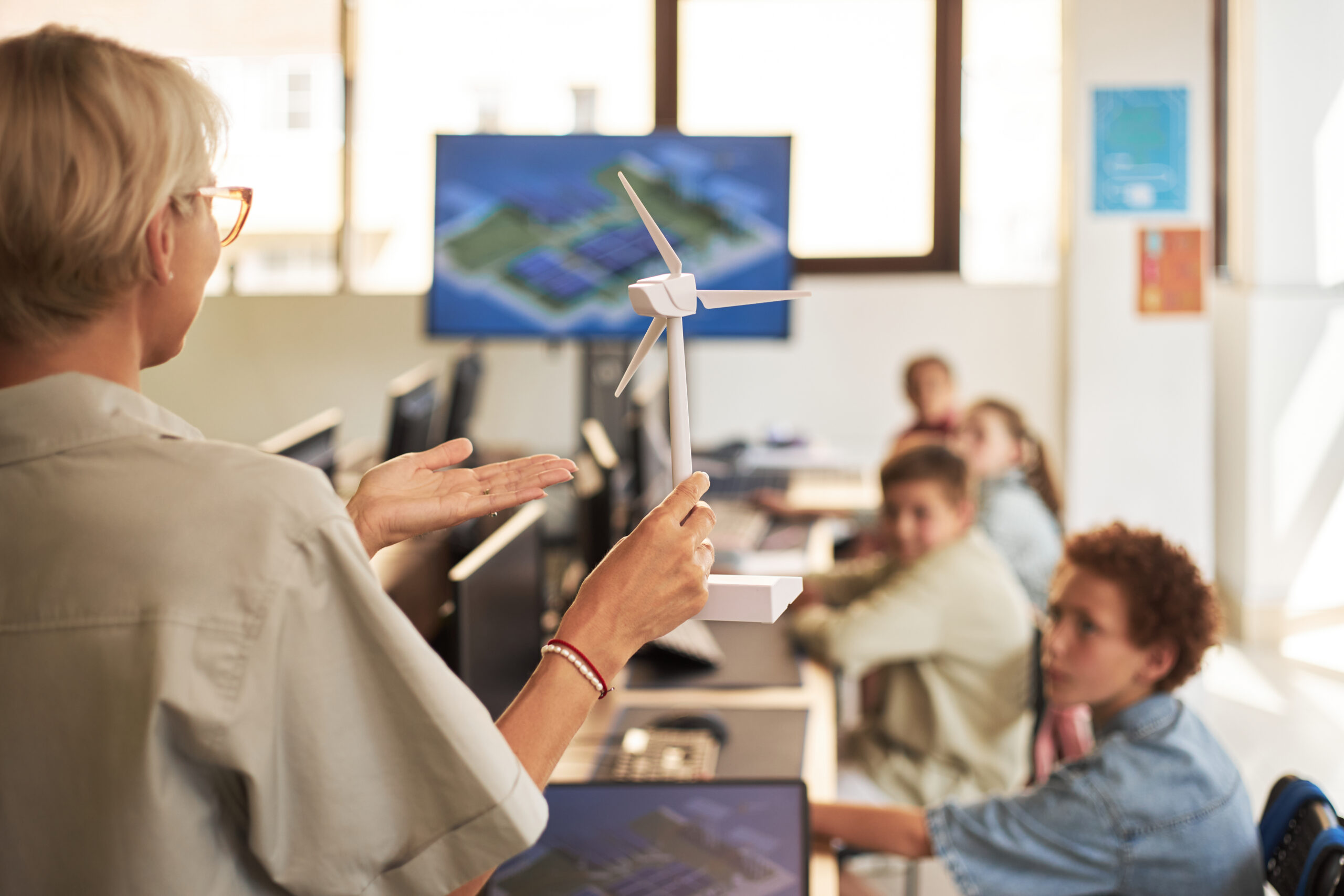
This activity gives students a break from note-taking and calculations while reinforcing core energy concepts. Students build a simple windmill using recycled materials – water bottles, cardboard, and other repurposed items. This also provides a natural preview of Unit 8’s focus on solid waste disposal and waste reduction. As they experiment with blade shape, angle, and number of blades, students explore how design choices affect electricity generation, reinforcing engineering design and the real-world factors that influence wind energy efficiency.

Science of Wind - Lab Investigation: Wind Energy - Teacher

Hands-On Lab

This is another project that Lynn uses to make student learning more hands-on. In this lab, students learn how to use an anemometer to measure wind speed and use their data to calculate the wind energy potential of a wind turbine.

Science of Hydropower - Water Pressure and Flow Lab - Teacher

Hands-On Lab

This activity provides another hands-on project for student learning. In this lab, students explore how the height of water affects flow rate and pressure, which are key principles behind how hydroelectric dams generate energy.

Introduction to Coal - Mining Simulation - Teacher

Hands-On Lab

This activity provides another hands-on project for student learning. This simulation engages students in exploring the real-world complexities of coal mining and coal-based power generation.

Cleaning Up an Oil Spill: Investigative Lab - Teacher Guide

Hands-On Lab

This activity provides another hands-on project for student learning. In this lab, students evaluate different materials and methods for cleaning oil spills by conducting an experiment to test their effectiveness.

Introduction to Efficiency – Video

Energy efficiency brings the math and concepts of Unit 6 into a personal context. Lynn shows this video during the Personal Energy Use emphasis of the unit.

Science of Energy Efficiency – Video

This video can be shown alongside the Introduction to Energy Efficiency Video.

Home Electricity Audit

Lynn uses this activity to connect energy efficiency and math to students’ personal lives. The Home Electricity Audit has students examine an electric bill, calculate the energy use of household devices, and draw conclusions from their data—building quantitative and analytical skills they’ll use on the AP exam.

U.S. Energy Issues Debate

Exam Prep / Synthesis

Lynn closes Unit 6 with this debate, a synthesis activity that challenges students to apply everything they’ve learned about energy sources, trade-offs, consumption patterns, and environmental impacts. This activity reinforces higher-order thinking and prepares students for FRQs where they must evaluate environmental decisions from multiple perspectives.

Energy Matchmaking Gallery Walk

Another synthesis activity that challenges students to apply their comprehensive knowledge of energy sources and trade-offs is the Energy Matchmaking Gallery Walk.

Basics Bioenergy Biogeochemical Cycles Careers
Access Answer Key!