

Solar Microgrid Math Challenge
Imagine you are an engineer working with a rural village that isn’t connected to the main electric grid. Instead, the village relies on a solar microgrid made up of multiple solar panels and a battery storage system. The community needs your help to calculate how much energy their system can produce and whether it will be enough to meet their daily electricity needs.
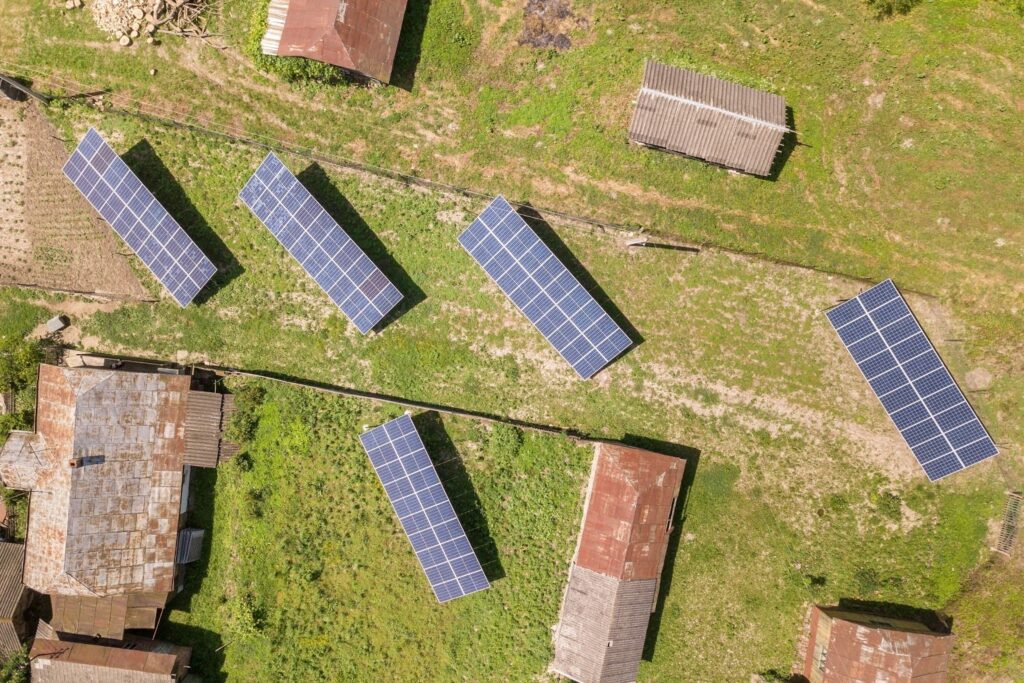
Here are the details:
- The microgrid has 40 solar panels.
- Each panel generates 300 watts of power at peak sunlight.
- The village receives an average of 5 hours of peak sunlight per day.
- The village’s daily electricity needs are 55 kilowatt-hours (kWh).
Key Formulas
- Total Power (W) = Number of Panels x Power per Panel (W)
- Energy Produced (kWh) = Total Power (kW) x Sunlight Hours
- 1 kW = 1,000 W
Instructions: Use the information above to answer the computational questions.
Q1. Calculate the total power (in watts) that the solar panels can generate at peak sunlight. Show your work.
Q2. Calculate how much energy (in kilowatt-hours) the entire microgrid produces in one day. Show your work.
Q3. Explain whether the microgrid produces enough energy to meet the village’s daily electricity needs and how you know.
Q4. If the village’s energy needs increase to 75 kWh per day, determine how many additional solar panels must be added to the microgrid to meet the new demand. Show all calculations and explain your reasoning.