

Introduction
Imagine using the Earth’s natural underground heat to warm or cool buildings! Geothermal systems do just that. In this experiment, you’ll see how underground soil can absorb or release heat using thermal strips and water.
Procedure
Carefully follow the steps below to conduct the experiment.
STEP 1: As a group, gather the materials provided by your teacher.
- 2 clear containers filled with soil (one chilled in the refrigerator overnight, one at room temperature)
- 2 resealable small plastic ziploc bags
- 2 liquid crystal thermal temperature strips
- 2 measuring cups or beakers
- 1 cup of warm water (~40-45 degrees Celsius)
- 2 pipette droppers (or other tool to drip water slowly)
- Timer or stopwatch
STEP 2: Set up your thermal bags.
- Stick a thermal strip inside each ziploc bag.
- Press it flat and seal the bag, pushing out as much air as possible.
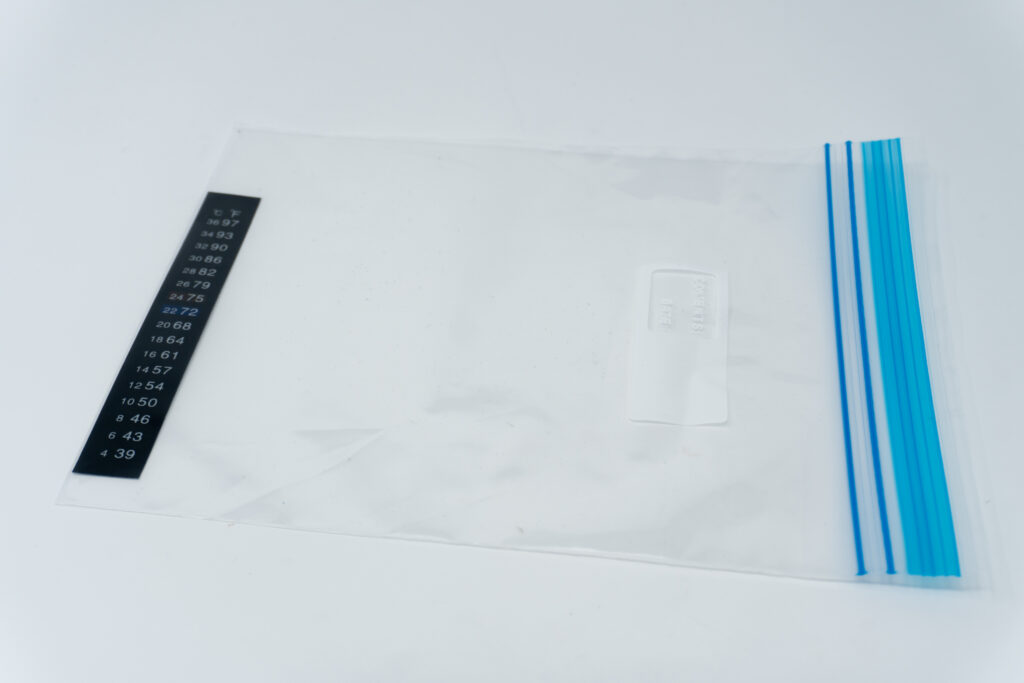
STEP 3: Place bags in soil.
- In each container, make a shallow area in the soil by one wall of the container (~2-3 cm deep).
- Place one sealed bag flat against the inside wall of each container, so that the strip is visible through the container wall.
- Cover the ziploc bag with displaced soil, but make sure that the strip is visible through the container wall.
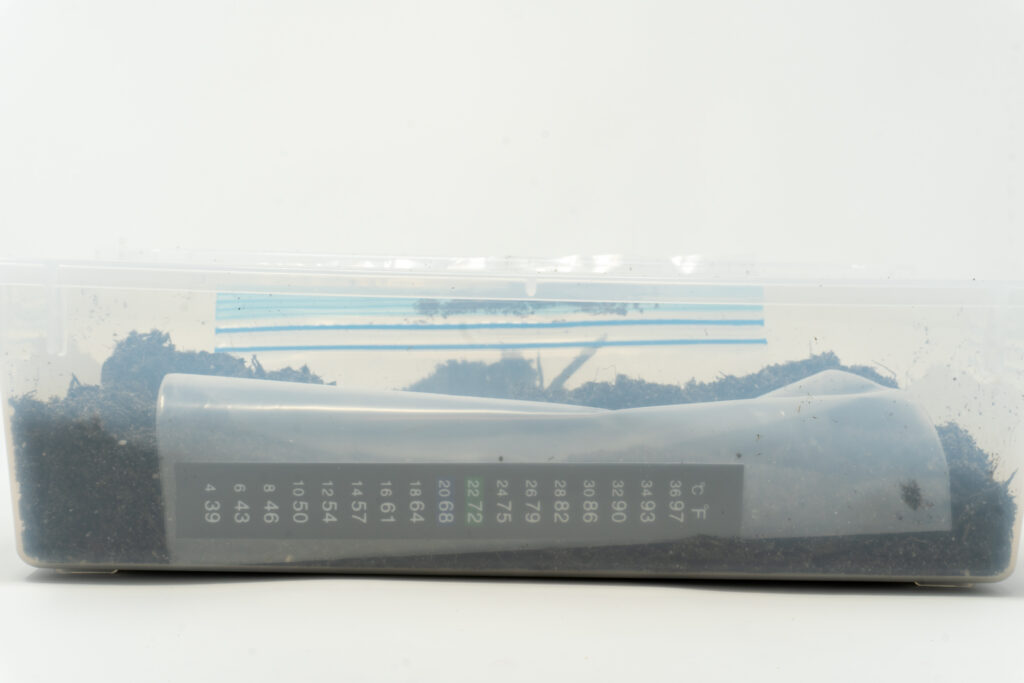
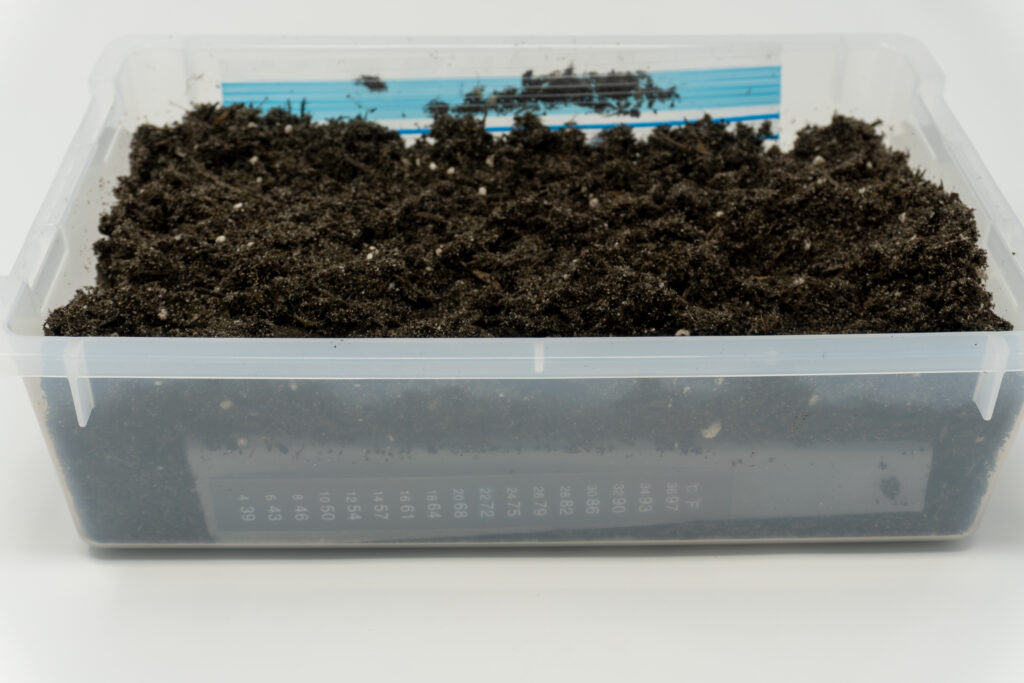
STEP 4: Add warm water.
- For each container, use a pipette dropper to drip ½ cup of warm water over the area with the ziploc bag (simulating a slow-moving pipe system, such as a geothermal loop).
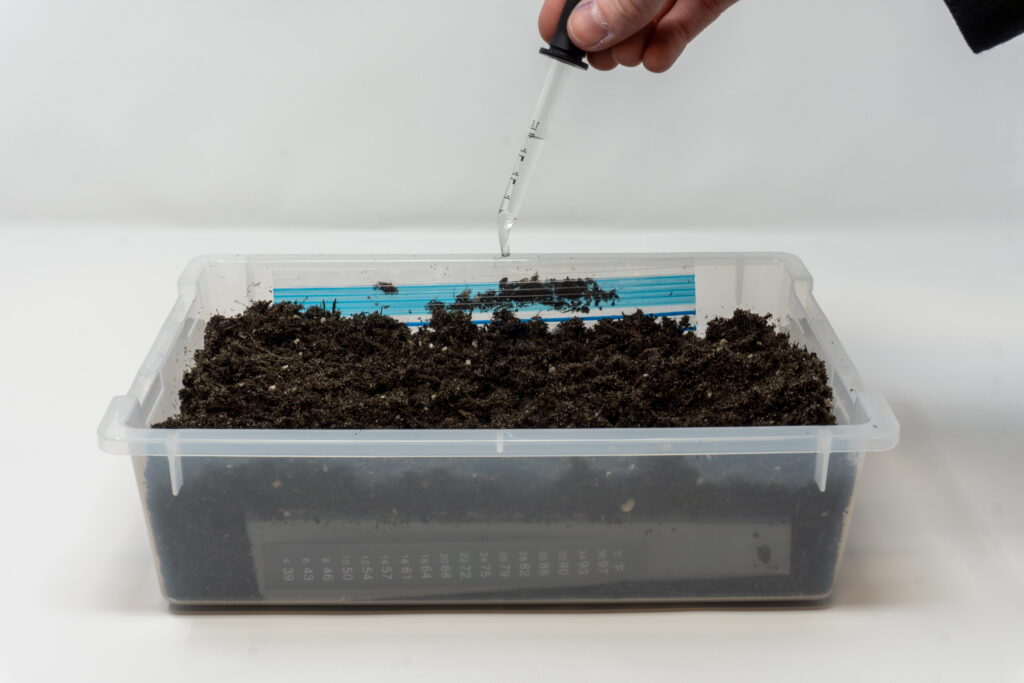
STEP 5: Observe and record.
- Use the timer to check the thermal strips every 30 seconds for 5 minutes.
- Record the temperatures in the observation data table below.
Observation Data Table
| Container #1 | Container #2 | ||
| Starting Temperature | Starting Temperature | ||
| 0.5 minute | 0.5 minute | ||
| 1 minute | 1 minute | ||
| 1.5 minutes | 1.5 minutes | ||
| 2 minutes | 2 minutes | ||
| 2.5 minutes | 2.5 minutes | ||
| 3 minutes | 3 minutes | ||
| 3.5 minutes | 3.5 minutes | ||
| 4 minutes | 4 minutes | ||
| 4.5 minutes | 4.5 minutes | ||
| 5 minutes | 5 minutes | ||
Reflection Questions
- What container showed a bigger temperature change? Explain why.
- What does this tell you about how underground soil stores or absorbs heat?
- How do you think this process can help cities heat or cool buildings without using a lot of electricity?
- Can you think of ways to improve this experiment?