

Introduction
In this lab, students investigate how filters protect indoor air by blocking airborne particles. Using a homemade test box and cocoa powder to model airborne particles and dust, students compare the amount of particle buildup behind two conditions: (1) no filter, and (2) a simple filter, such as tissue paper or a face mask. Students collect data on how much dust reaches a collection card outside the filter, and use their results to understand how real filters, such as those in HVAC systems or masks, help improve air quality.
Student Objectives
Students will be able to
- Build and test a simple air filter box.
- Compare particle buildup with or without a filter.
- Record, analyze, and interpret experimental data.
- Explain the importance of air filtration in indoor environments.
- Relate findings to real-world filtration technologies.
Materials
Per group:
- Student Handout
- 1 shoebox or similar box with lid
- Additional piece of cardboard (to hold collection card)
- 1 large straw
- Cocoa powder (2 tsp)
- 2 sheets of tissue paper (or other material, such as a coffee filter or face mask)
- 1 sheet of paper (for collection cards)
- Clear packing tape and clear regular tape
- Strong scissors or box cutters (supervision required)
- Timer
- Marker
- Teaspoon
- Damp paper towels or cleaning rags (to wipe down surfaces)
Note: The material that students will use for the filter test will be up to teacher discretion. The easiest method would be for all students to simply use the same material, such as a sheet of tissue paper. Alternatively, the teacher can allow each group to choose their filter material (e.g., tissue paper, coffee filter, or face mask).
Procedure
- Divide students into groups of 2-3 and provide them with the Student Handout.
- Students will follow instructions on the Student Handout to create their filter box and collection cards.
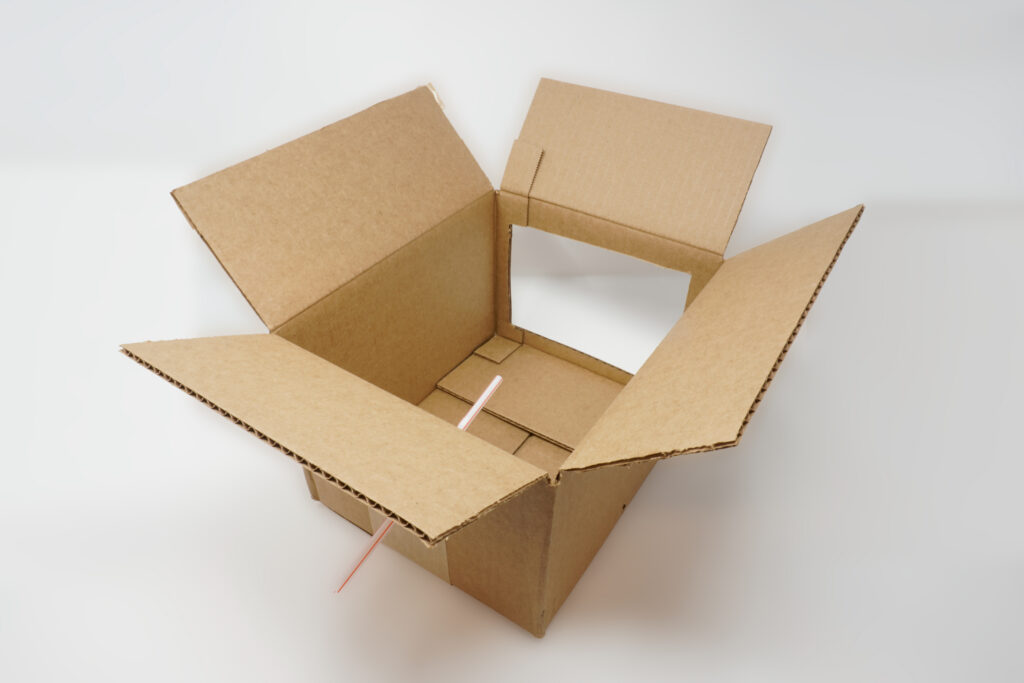
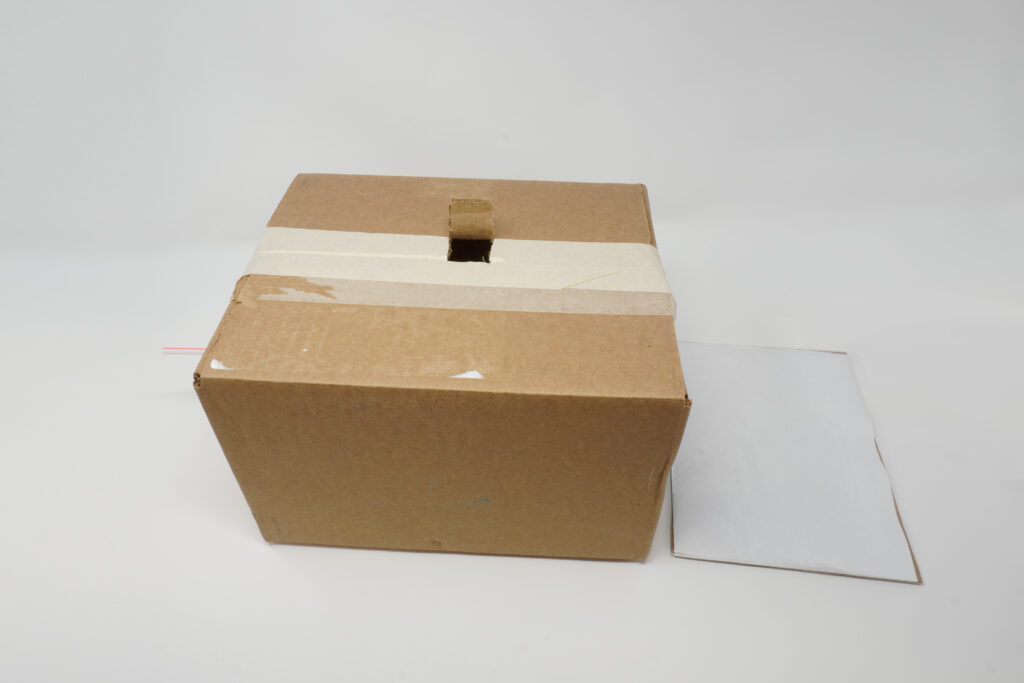
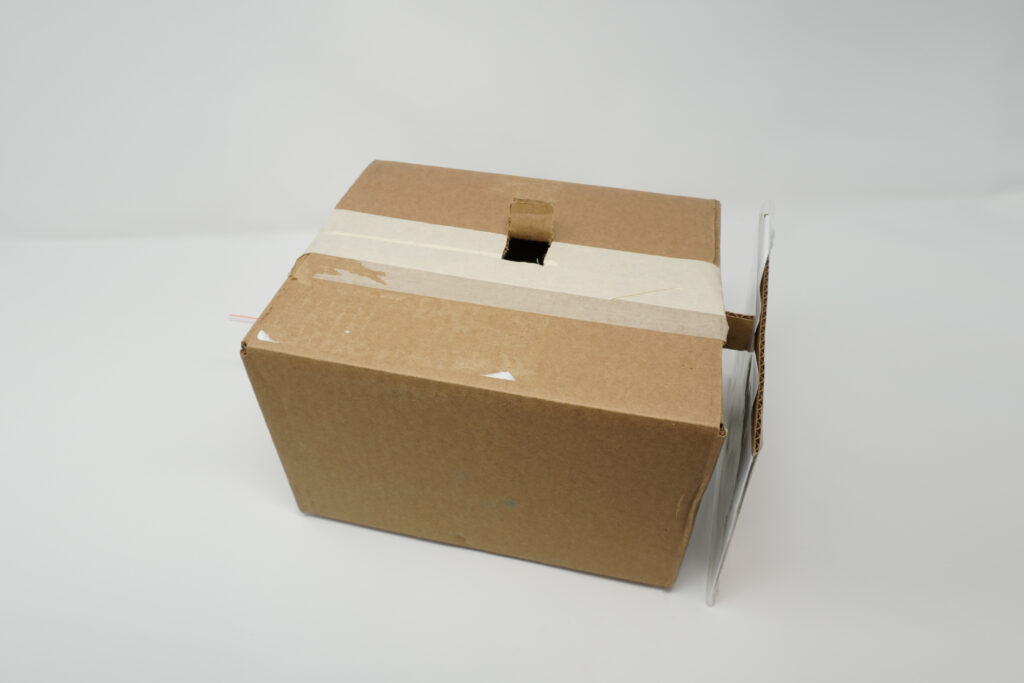
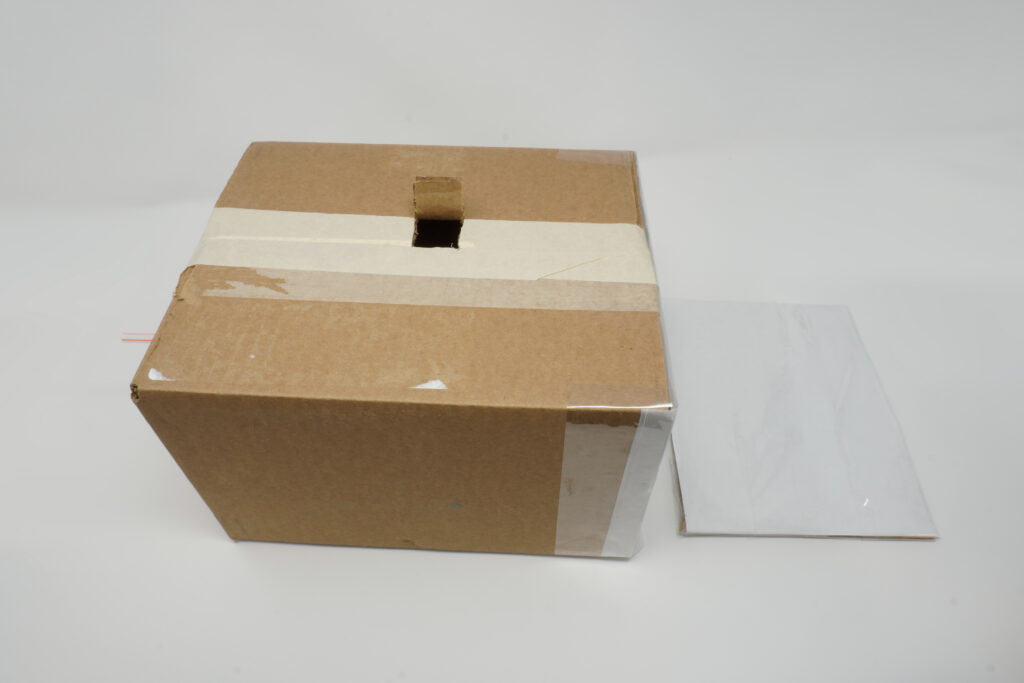
- Each group will conduct two trials: no filter test, and filter test, and compare the results using sketches and observational notes.
- Students will complete analysis and reflection questions on the Student Handout, connecting their findings to real-world filtration technologies.
Safety Notes
- When students blow through the straw, they should be careful to pause and turn their heads to inhale, so as not to inhale cocoa powder.
- Eye protection can be used if preferred.
- Careful supervision is needed when students are using scissors and/or box cutters. Ensure that they are following safety procedures and best practices.
- Use damp cloths for clean-up to reduce airborne powder.
- Ideally, use an outside location between trials to clean out boxes. If not available, have students carefully upturn the box over a garbage bag and then use a damp cloth to clean out the rest, taking care to avoid spreading the powder.
Optional Extensions:
- Compare tissue vs. cloth mask performance.
- Test a sample of real HVAC filter fiber.
- Engage students in a “design your own filter” challenge.
Answer Key
The Student Guide contains the Air Filters in Action Lab – Student questions.
Part 3: Analysis – Understanding Your Lab Results
- Answers will vary.
- (Sample Student Response: The No Filter card had a lot more dust. Probably around 70-80% of the sticky tape had captured a layer of specks. The Filter card had a lot less dust. Maybe only 5-10% of the surface had some specks. The No Filter card looked messy and dirty because of the captured dust, while the Filter card looked almost clean.)
- Answers will vary.
- (Sample Student Response: The filter allowed air through because the material had tiny pores that air can fit through, but larger dust particles cannot. Also, the material is made of fibers that crisscross, forming a sort of web. As the air moves through, the fibers catch and hold onto the dust. Its thickness and layers also help give the particles more chances to get stuck and not pass through.)
- (Sample Student Response: (1) Uneven blowing strength: If I blew harder during one trial than the other, more or fewer particles could have moved through the box, changing the dust amounts hitting the filter outlet. (2) Leaky filter setup: If the tape around the filter wasn’t sealed perfectly, dust might escape around the edges instead of going through the filter material. Both of these could make the results look more or less effective than they really were.)
- (Sample Student Response: One improvement would be to use a more precise measuring spoon to make sure the cocoa amount is exactly the same each time. Another improvement would be to seal the box shut, so that the air doesn’t find alternative exits, and must go through the filter. Both changes would reduce variation and make the experiments more reliable.)
Part 4: Application – Connection to Indoor Air Quality
- (Sample Student Response: Air filtration is important because it helps keep people healthy by blocking harmful particles from being inhaled. Filters can remove things like dust, dirt, pollen, allergens, smoke, or other tiny particles from the air.)
- (Sample Student Response: Both let air pass through tiny pores but trap bigger particles, cleaning the air and keeping those particles from getting into your lungs. Real air filters are usually made from stronger materials and have multiple layers, while our filter was just one simple sheet. Real filters also trap much smaller particles than our filter can.)
- (Sample Student Response: If a filter creates too much resistance, air cannot move through easily. This can make rooms stuffy, reduce ventilation, and make fans or HVAC systems work harder. If a filter provides too little filtration, harmful particles will still pass through. For example, smoke or allergens that stay in the air can cause breathing problems, even though the air seems to flow well.)
- Answers will vary.
- (Sample Student Response: Add or upgrade air vents or fans to increase fresh air movement and help remove indoor pollutants. Install better air filters or use portable air purifiers to remove dust, pollen, smoke, and other particles from the air.)