

Introduction
Energy efficiency describes how well a device converts input energy into useful output energy. When an electrical device is used, not all of the electrical energy becomes useful output. Some energy is lost to the surroundings as heat, sound, or light. Because of this, no device is 100% efficient.
In this lab, you will investigate the energy efficiency of an electric heating device by measuring the electrical energy input and the thermal energy gained by water. In this investigation, efficiency is estimated by comparing the electrical energy supplied to the device with the thermal energy gained by the water. Any energy used to heat the container or lost to the surroundings is considered inefficiency in the system. You will also compare your results with other groups that used the same electrical heating device to analyze how multiple trials improve scientific investigations.
Materials
- Water (1 cup)
- Digital scale
- Thermometer
- Stopwatch or timer
- Measuring cup
- Calculator
Get Teacher Instructions for:
- Electric heating device
- Kill-a-Watt meter
Safety Precautions
- Handle electrical equipment carefully at all times
- Do not touch hot surfaces; let everything cool before cleaning up
- Be cautious when around hot water and hot surfaces
- Follow all teacher instructions
Procedure
Part 1: Measuring Electrical Energy Input
- Using the digital scale, measure and weigh approximately 1 cup of water.
- Record the Mass of Water (kg) in the data table below.
- Using the thermometer, measure and record the Initial Temperature (°C) of the water.
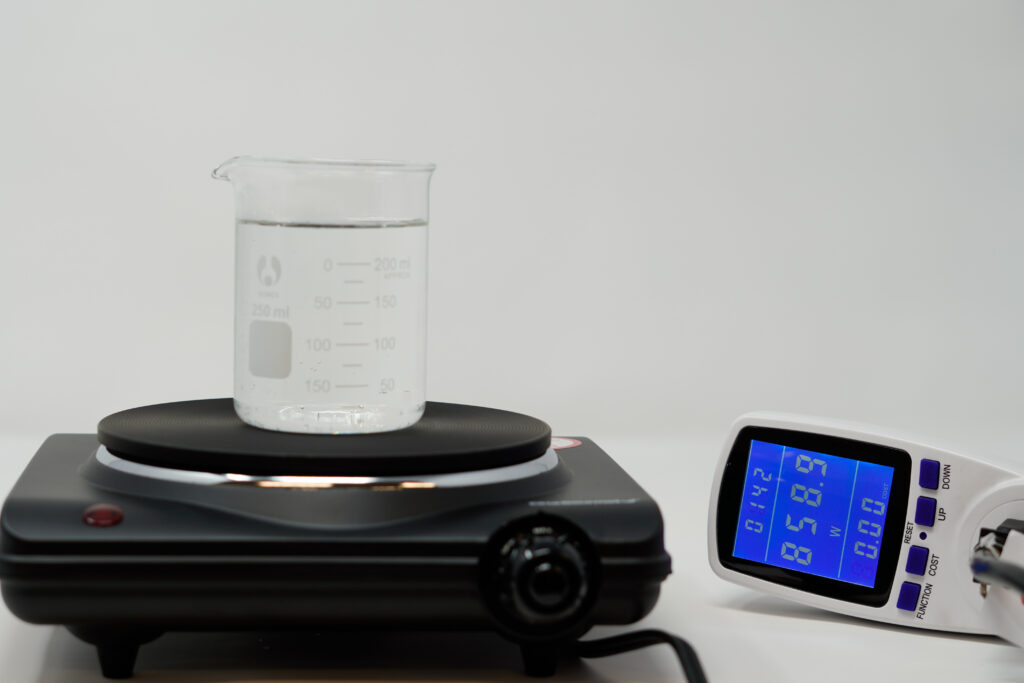
- Plug the electric heating device into the power meter, and add water to the heating device.
- Turn on the device and start the stopwatch simultaneously.
- Stop the stopwatch when the water boils. Record the Time (s) in the data table.
- Record the Power (W) reading of the power meter.
- Measure and record the Final Temperature (°C) of the heated water.
- Calculate and record the Total Input Energy (J) using the formula:
Input Energy (J) = Power (W) x Time (s)
Part 2: Calculating Useful Output Energy
- Calculate and record the thermal energy gained by water using the formula:
Q = m x c x ΔT- Q is the heat energy (Joules)
- m is the mass of water (kg)
- c is the specific heat capacity of water (4,186 J/kg·°C)
- ΔT is the change in temperature (°C)
Part 3: Calculating Energy Efficiency
- To calculate efficiency, use the formula:
Efficiency= (Q ÷ Input Energy) x 100%
- Record the efficiency percentage in the data table. Round to the nearest tenth.
- Share your results with the rest of the class and compare your results.
Data Table
| Power (W) | Time (s) | Input Energy (J) | Mass of Water (kg) | Initial Temp (°C) | Final Temp (°C) | Change in Temp (°C) | Output Energy (J) | Efficiency (%) |
|---|---|---|---|---|---|---|---|---|
Analysis Questions
- Why is the efficiency of your heating device less than 100%?
- What forms of energy were lost to the surroundings?
- How did efficiency values compare between groups or trials?
- How does using multiple trials improve the reliability of experimental results?
- How does energy efficiency relate to energy conservation in everyday life?
- Suggest ways to improve the efficiency of the device tested.
- Is it important to use energy-efficient devices in daily life? Explain why or why not.
Conclusion
Summarize your findings about the energy efficiency of the appliance tested. Reflect on the importance of energy efficiency in reducing energy waste and protecting natural resources.