
Introduction
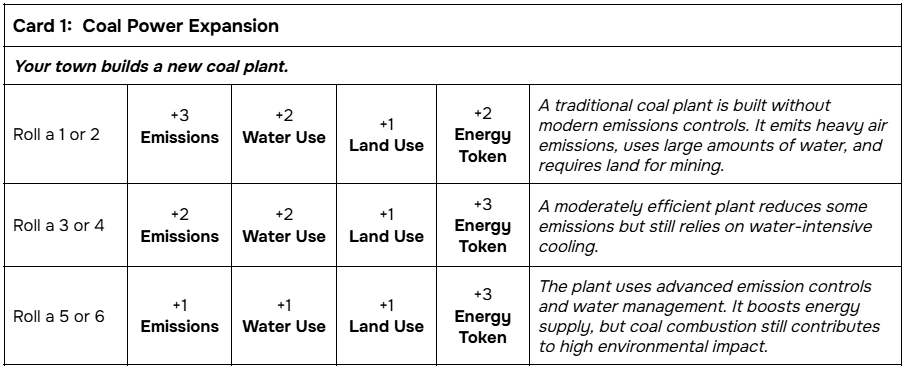
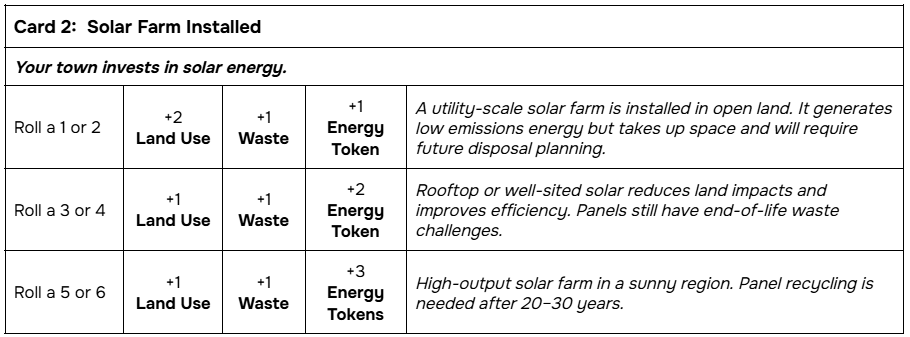
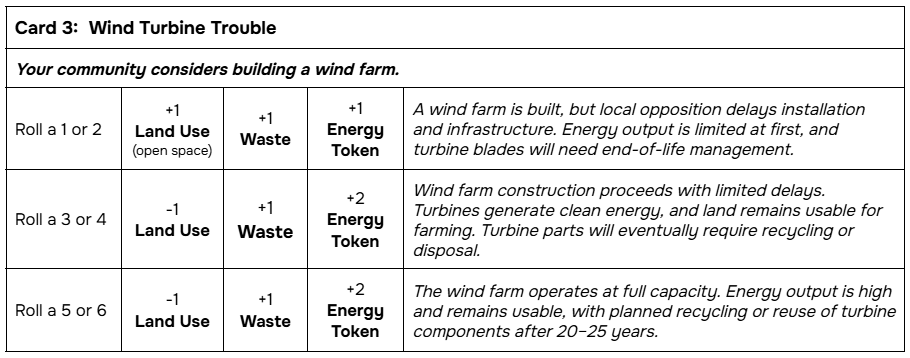
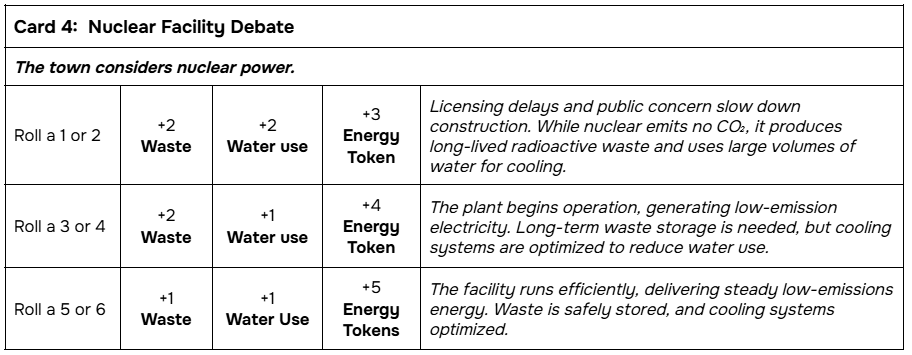
This fast-paced, engaging activity helps students explore the environmental trade-offs of different energy sources. In small groups, students roll dice to simulate real-world energy scenarios, gaining or losing energy tokens while tracking air emissions (referred to as “emissions” for this activity), water use, land use, and waste. After a set number of rounds, they compare results to see which group made the most sustainable choices. It’s a fun way to spark discussion and build awareness around energy and environmental impact.
Note on Terminology: The word pollution gets used a lot, but it’s not always clear what it means. In this activity, the focus is on the specific environmental impacts of different energy sources on our air, land, and water. Students will explore how each energy source affects the environment, beyond just calling it “clean” or “dirty.”
Student Objectives
Students will be able to
- Identify the environmental impacts associated with different energy sources.
- Analyze and compare the trade-offs between energy production and environmental sustainability.
- Track and interpret data from game outcomes to evaluate decision-making strategies.
- Collaborate in small groups to make informed choices based on scenario outcomes and group discussion.
Materials (per group)
- Student Handout
- 1 6-sided die
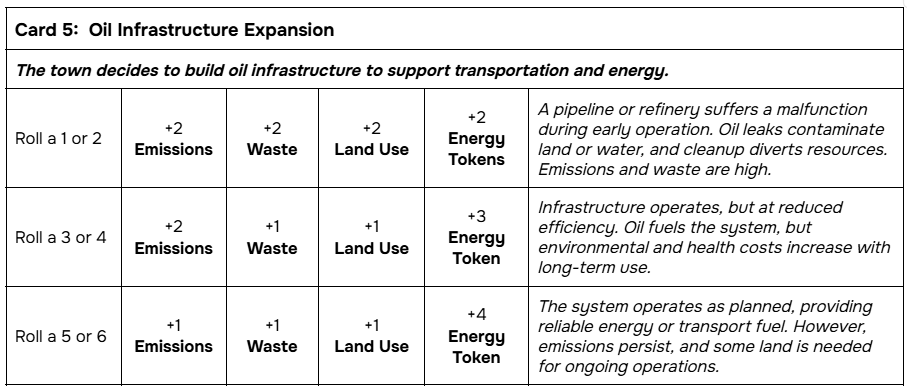
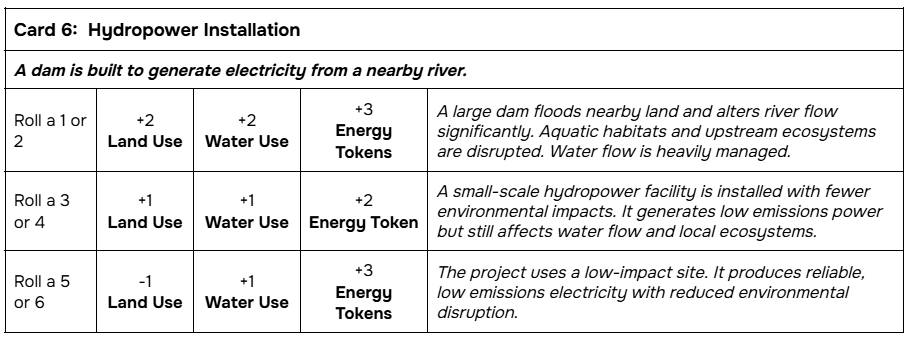
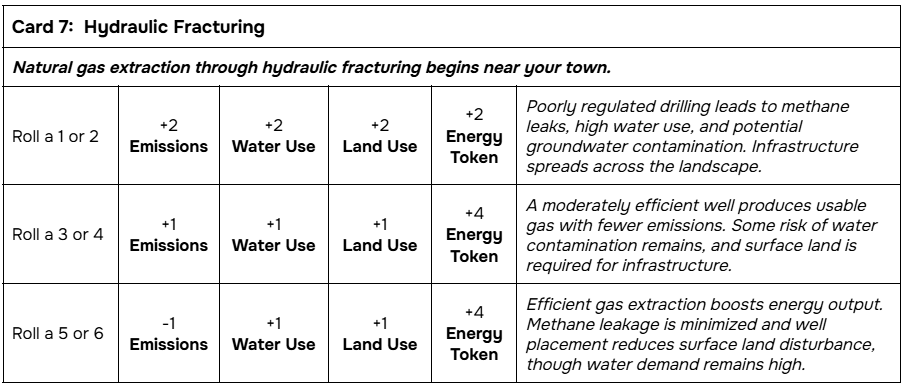
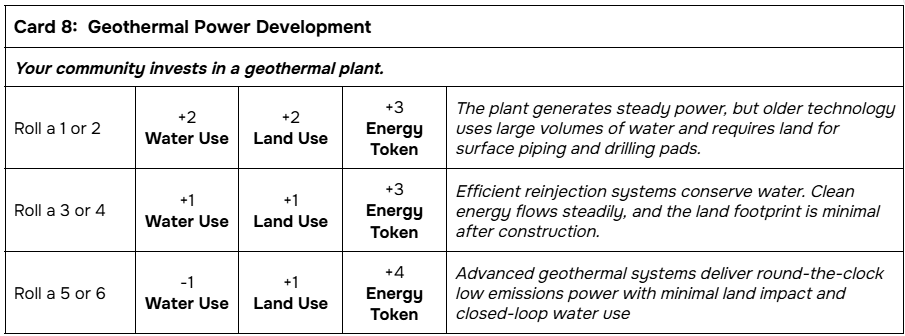
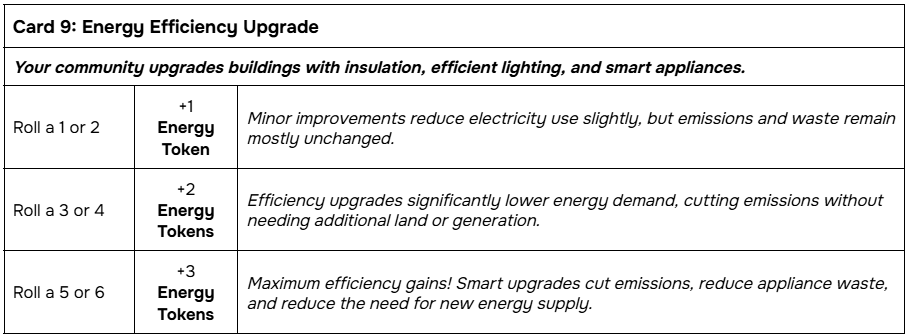
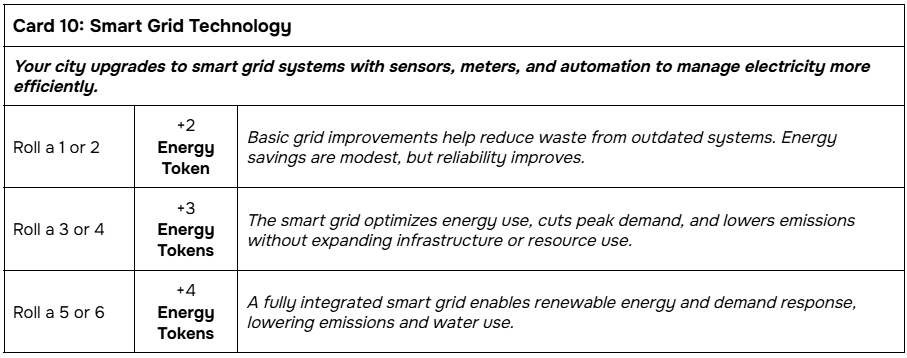
- Scenario cards (printed and cut out)
- ~25 Energy tokens (e.g. colored paper slips or small objects)
How to Play
- Each group receives
- A set of Scenario Cards
- The Student Handout (includes the Impact and Energy Tracker Sheet)
- 5 Energy tokens to start
- Place the Scenario Cards face down in a stack.
- When a player draws a Scenario Card, they should read it out loud, and then record the card name on the Tracker Sheet.
- The person sitting to the right of the card picker will roll the die to determine the outcome listed on the card.
- The person who rolled the die will then read the roll choice scenario out loud, and record Roll Choice description on the Tracker Sheet. They will also record impact and energy points on the Tracker sheet. This includes recording a gain or loss of energy tokens, adding emissions points, water use points, land use points, or waste points.
- After 4-8 rounds, or a set time, the group adds up their
- Total emissions points + total water use points + total land use points + total waste points = Total Environmental Impact
- Total energy points = Total Energy
- Student groups are successful if their environmental impact points do not exceed their total energy points!
- Students will work together in a group to complete the reflection questions on the Student Handout.
Extensions
- Add Scenario Cards based on extreme weather events, community protests, or new technology breakthroughs.
- Have students create their own Scenario Cards based on research.
- Use double dice rolls for more complexity (e.g. weather + energy policy)
Scenario Cards