

Introduction
How Well Does a Simple Filter Block Airborne Dust?
Air filters help clean the air by blocking tiny particles like dust, pollen, and smoke. In this lab, you will compare two tests: (1) air moving with no filter, and (2) air moving with a simple filter. You’ll use cocoa powder to model dust, and collect data to see how well your filter blocks the particles.
Objectives
Today you will:
- Build a simple air filter test box.
- Test airflow with and without a filter.
- Collect and analyze data.
- Explain how filters protect indoor air.
Materials
Per group:
- 1 shoebox or similar box with lid
- Additional piece of cardboard (to hold collection card)
- 1 large straw
- Cocoa powder (2 tsp)
- 2 sheets of tissue paper (or other material, such as coffee filter or face mask)
- 1 sheet of paper (for collection cards)
- Clear packing tape and clear regular tape
- Strong scissors or box cutters (supervision required)
- Timer
- Marker
- Teaspoon
- Damp paper towels or cleaning rags (to wipe down surfaces)
Filter Material
Based on teacher instructions, write down what your filter material will be (e.g., tissue paper, coffee filter, face mask, etc.). Write a full sentence.
Forming a Hypothesis
In this experiment, you will place a sticky collection card in front of your filter to “collect” the particles that go through. To make your predictions, draw two sketches.
- Using no filter, what do you think your collection card will look like? Draw tiny dots on the card to represent collected powder or dust.
- Using a simple filter, what do you think your collection card will look like? Draw tiny dots on the card to represent collected powder or dust.
Part 1: Build the Filter Test Box
- Preparing the filter box
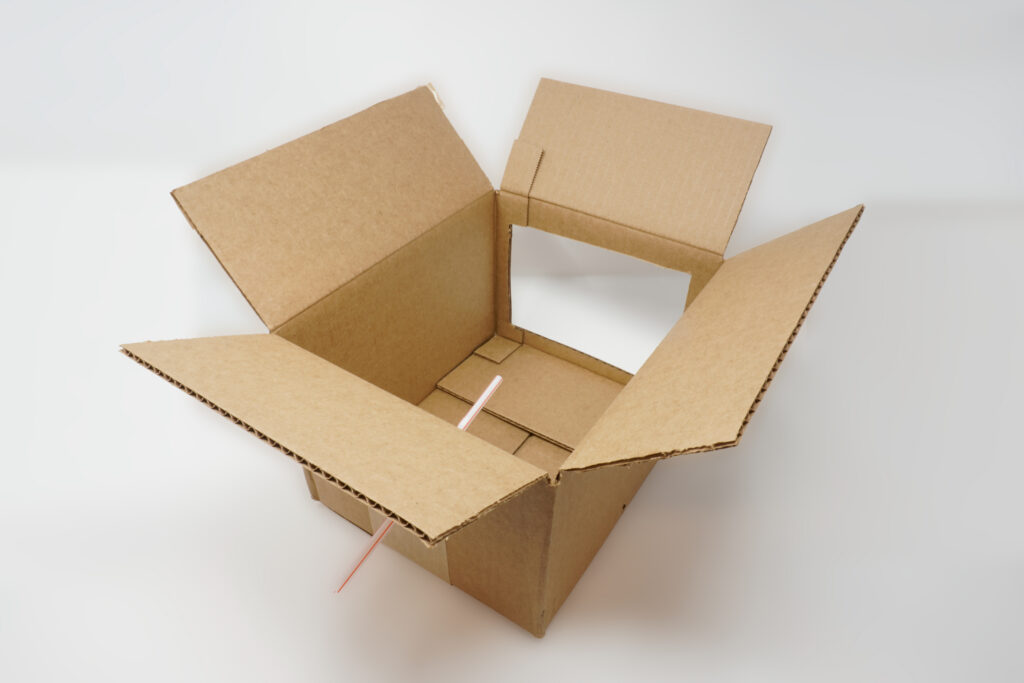
- Cut a small hole in one end of the box for the straw inlet. The straw should fit snugly and not be loose.
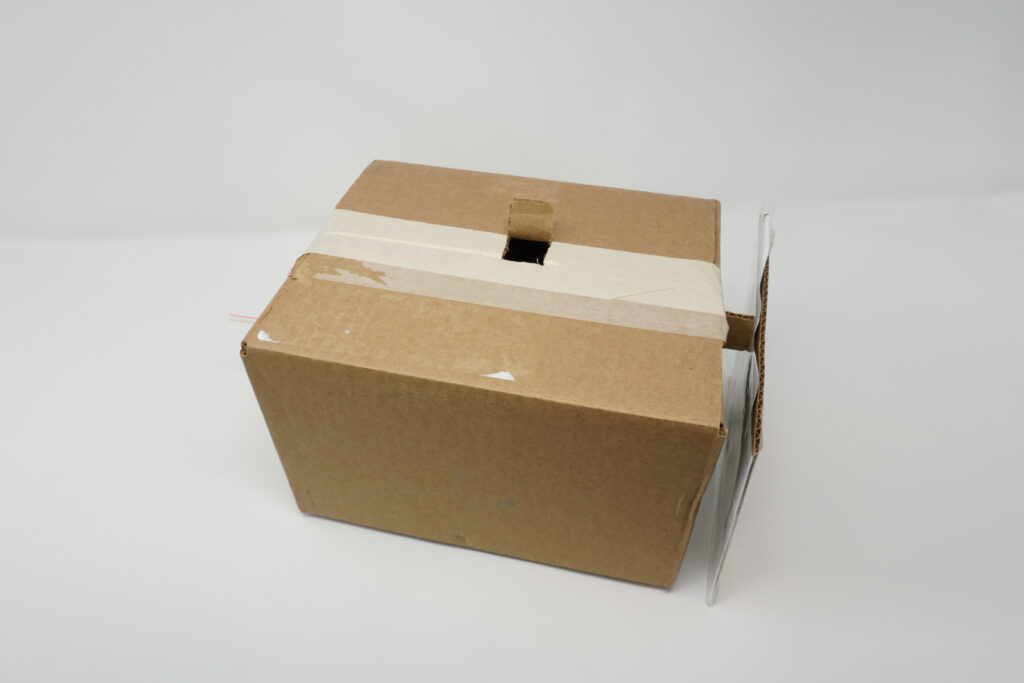
- Cut a large square hole on the opposite end of the box for the filter frame. The size will depend on the size of your box. Use Figure 1 as a reference.
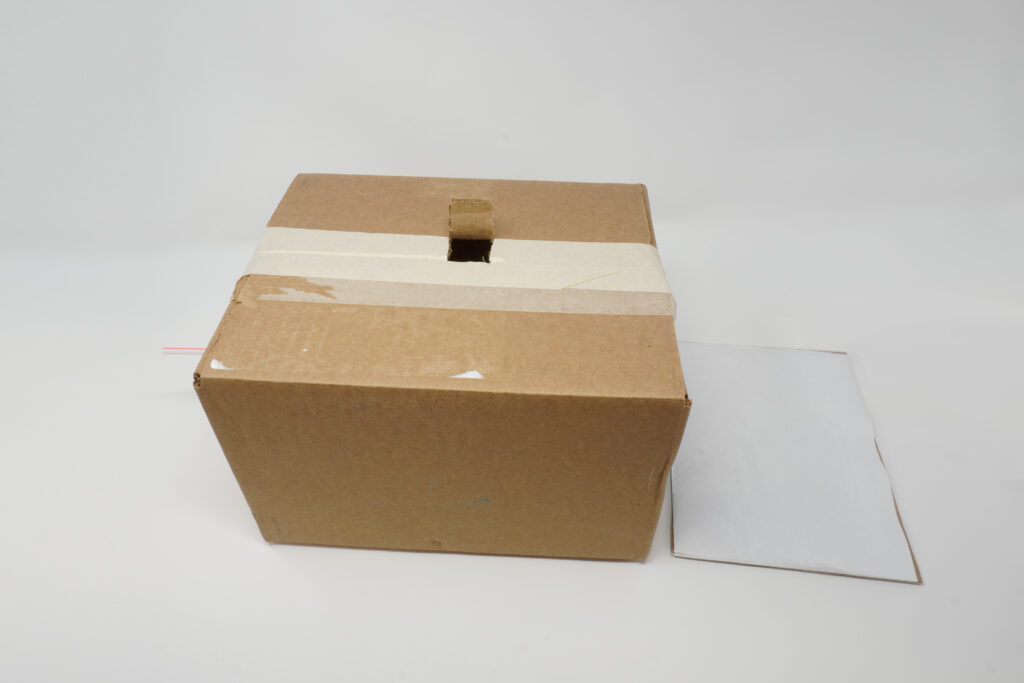
- Cut a small hole (1 inch x 1 inch) in the top center of the box for the cocoa powder insert. Cut only 3 sides of the opening to create a flap. Use Figure 2 as a reference.
- Prepare a collection card
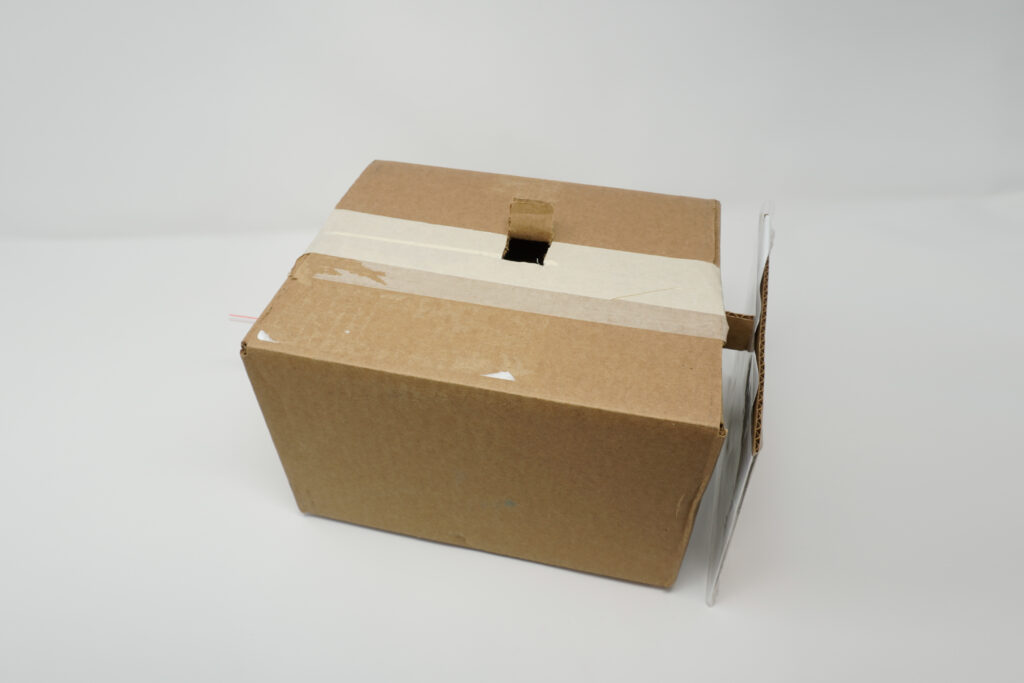
- Using the additional piece of cardboard, cut a cardboard square to about the same size as the side of the box with the filter frame.
- Cut a sheet of paper (this is the collection card) and attach it to the cardboard square using regular tape.
- Cover the collection card with clear packing tape (sticky side out).
- Tape a 1-inch piece of cardboard to the top and perpendicular to the cardboard square. This will prevent the collection card from actually touching the filter outlet.
- Test 1: No Filter
- Do not place any filter material over the filter outlet. Position the sticky side of the collection card behind the filter outlet.
- Add a teaspoon of cocoa powder through the top hole. Close the flap securely.
- Turn your head away from the box, take a deep breath and then blow air through the straw inside the box. Do not inhale with your mouth near the straw. Turn your head, inhale and then blow through the straw again. Blow through the straw 5 times.
- Remove the collection card and observe how much powder it collected. Make a sketch in the Data and Observations Table below.
- Open the box lid and carefully dump any excess cocoa powder in the trash, or shake it outdoors to prepare for the next trial.
- Test 2: Simple Filter
- Prepare a new collection card by removing the tape and paper from the cardboard piece. Place a new piece of paper and clear packing tape on the card. Then cover it with clear packing tape (sticky side out).
- Take your filter material and tape it securely over the filter outlet. Position the sticky side of the collection card behind the filter outlet.
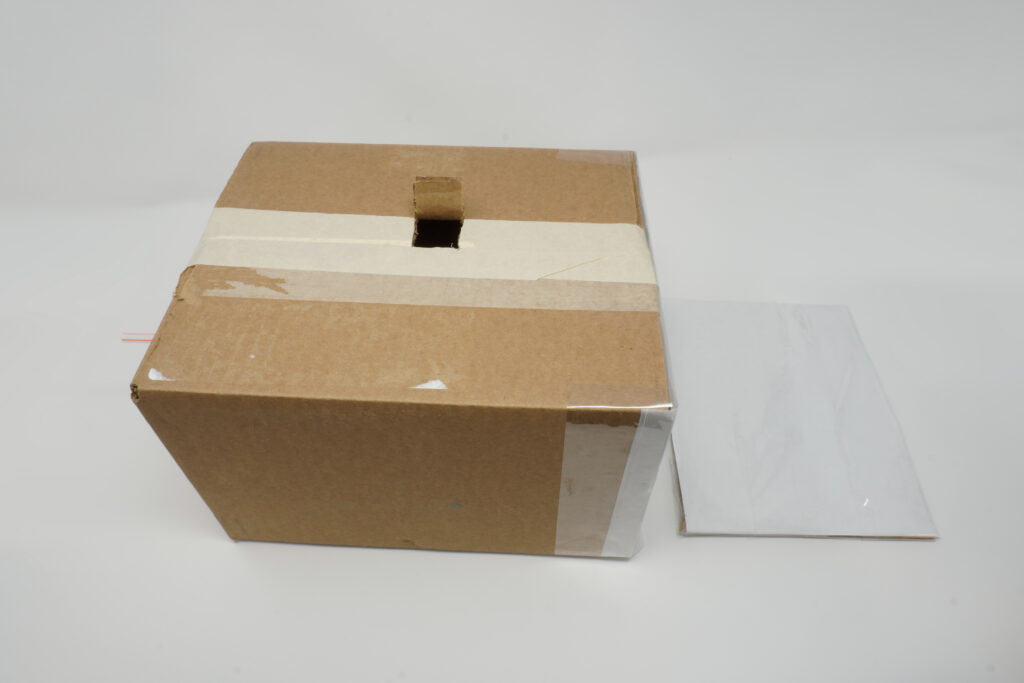
- Repeat the steps of adding a teaspoon of cocoa and blowing through the straw 5 times.
- Remove the collection card and observe how much powder it collected. Make a sketch in the Data and Observations Table below.
- Open the box lid and observe how effectively the filter was able to block the powder from going through.
Data and Observations Table
| Test | Filter Material | _______________Sketch_______________ | Additional Notes |
|---|---|---|---|
| 1 | |||
| 2 |
Part 3: Analysis – Understanding Your Lab Results
- Compare your results to your hypothesis sketches.
- Did the No Filter and Filter cards look the way you predicted?
- Which parts of your predictions were accurate and which were not?
- Explain how your observations support your answer.
- Describe how the amount of dust on the No Filter card differed from the amount on the Filter card.
- Be specific about which card had more or less dust and by how much (quantitatively and qualitatively).
- Identify the filter material your group tested and evaluate how well it reduced dust.
- How effective was it at blocking dust compared to the No-Filter condition?
- Cite specific evidence from your data (e.g., the amount or pattern of dust on the cards).
- Explain how your filter could allow air to pass while trapping dust particles.
- Describe at least two physical features or properties of the filter that could account for this (e.g., pore size, texture, thickness).
- Identify at least two possible sources of error in your experiment that could have influenced your results.
- Explain how each source of error might change the outcome.
- Suggest one or more improvements to the experimental setup or procedure that would make the experiment to make the results more accurate or fair?
- Explain why your suggested improvement would help.
Part 4: Application – Connection to Indoor Air Quality
- Why is air filtration important in homes, classrooms, and workplaces?
- Explain how filtration helps people’s health and comfort.
- Give at least three examples of pollutants or particles that air filters commonly remove.
- In what ways does the filter you tested behave similarly to an air filter in real-life situations (e.g., air vent filter or air purifier)?
- Describe at least one similarity in how they trap particles.
- Describe at least one difference.
- Air filters must balance allowing enough airflow while removing harmful particles.
- What problems could occur if a filter creates too much resistance to airflow?
- What problems could occur if a filter provides too little filtration?
- Use examples to support your explanations.
- If the material you tested was used in an actual ventilation system, what might be one advantage and one disadvantage of using it?
- Consider effectiveness, airflow, cost, durability, or other practical factors.
- Imagine a home or classroom with poor ventilation. What are two engineering or design changes that could improve indoor air quality?
- Explain briefly how each change would help.