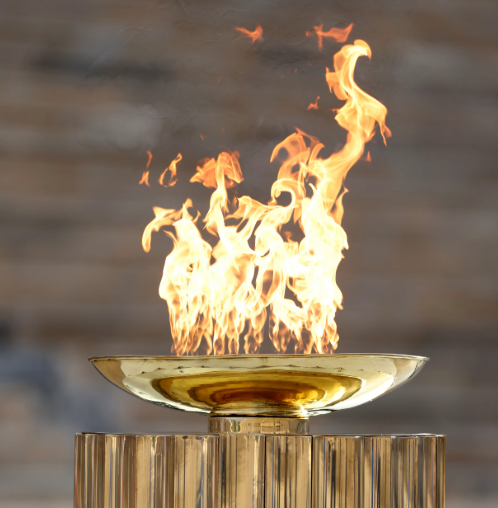

Bringing the Winter Olympics Into Energy and Environmental Science
A Winter Olympics Energy Lesson Built Around the Olympic Flame
When the Winter Olympics are on, students notice. They’re watching events, recognizing countries, and picking up on the traditions that show up again and again during the Games.
That shared context makes February a great time to connect classroom learning to something students are already seeing outside of school. Our newest Winter Olympics–themed lesson, The Olympic Flame: Energy and Emissions CER, uses one familiar symbol, the Olympic flame, as a way into deeper conversations about energy systems, environmental impact, and design trade-offs.
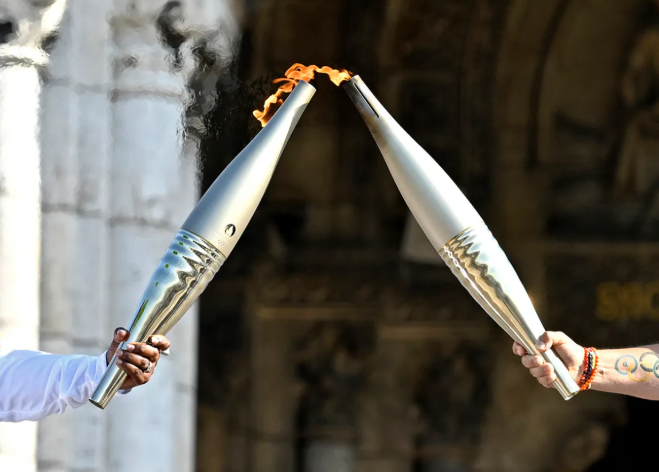
A Familiar Symbol With a Lot Beneath the Surface
The Olympic flame shows up everywhere during the Games. It’s part of the opening ceremony, the medal moments, and the visual language of the Olympics as a whole.
In this activity, students explore how that flame has been designed and powered in recent Games, including traditional combustion flames, electric flame effects, hydrogen-powered flames, and biofuel-based options. As they work through each scenario, students begin to see how energy choices influence environmental outcomes, even when the final result looks similar on screen.
Because the context is recognizable, students can focus their attention on understanding the systems behind the scenes rather than trying to make sense of an unfamiliar scenario.
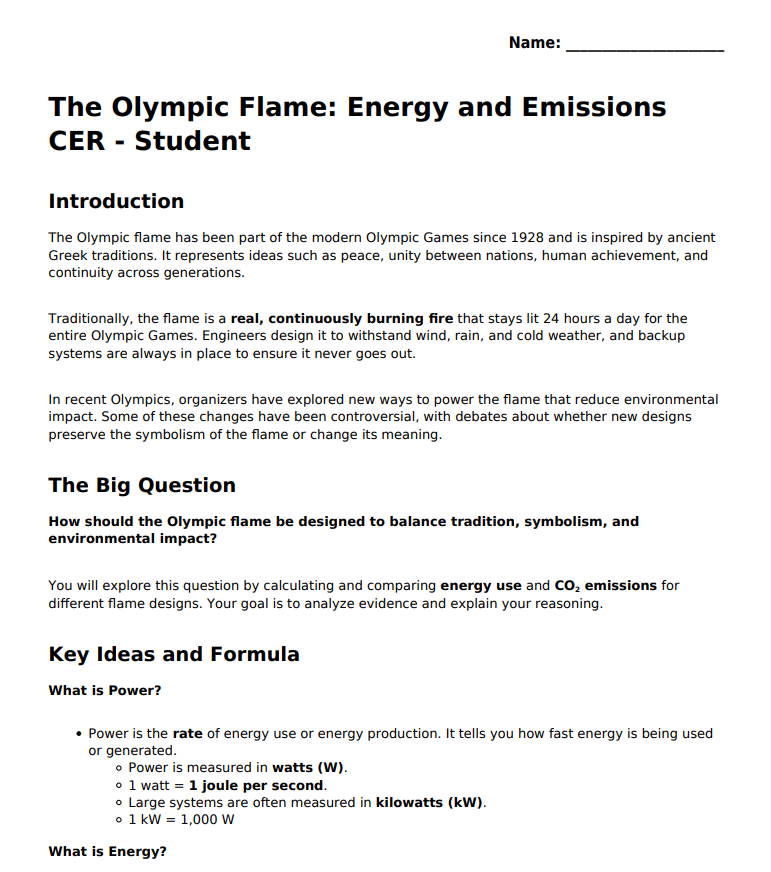
What’s Included in the Lesson
This activity is structured to support both quantitative reasoning and thoughtful discussion.
Students:
- Calculate energy use using power and time relationships
- Estimate and compare CO₂ emissions across different flame designs
- Examine how electricity generation sources affect overall emissions
- Explore hydrogen and biofuels through realistic, simplified models
- Use evidence to support a Claim-Evidence-Reasoning response about design trade-offs
The lesson intentionally highlights that energy use and emissions are not always intuitive. Two designs that look similar can have very different environmental impacts depending on how they’re powered.
That realization gives students something meaningful to wrestle with as they build their CER.
Flexible Enough to Fit Different Classrooms
One of the strengths of this lesson is how adaptable it is.
Teachers can:
- Use the full investigation over multiple class periods
- Select specific sections to highlight electricity, combustion, or alternative fuels
- Assign the CER as a standalone performance task
- Use the lesson as a discussion anchor during the Olympics and revisit it later in an energy unit
The math is approachable, the assumptions are clearly stated, and the structure makes it easy to scale up or down depending on time and student readiness.
A Natural Fit for February Instruction
This lesson works especially well in February because the Winter Olympics provide a shared reference point throughout the month. Students continue seeing the flame during broadcasts, which reinforces the ideas explored in class without needing constant reintroduction.
Rather than competing with current events, the lesson uses them as a backdrop for exploring real-world energy decisions and environmental trade-offs.
Connecting Content to the World Students See
At its core, this activity is about helping students recognize that energy systems shape the world around them, even in places they might not expect.
By examining the Olympic flame through an energy and environmental lens, students practice applying scientific thinking to a global event they already recognize. That connection helps the content feel relevant, grounded, and worth discussing.
If you’re looking for a February-ready lesson that blends current events with solid energy and environmental science reasoning, this Winter Olympics activity is designed to meet that moment.